
Freight Forward: Navigating Key Legal, Workforce, and Regulatory Shifts
Freight Forward: Navigating legal, workforce, and regulatory shifts in logistics. Texas limits shipper liability, feds expand veteran trucking, rail safety legislation returns, and high-speed rail regulations modernize.
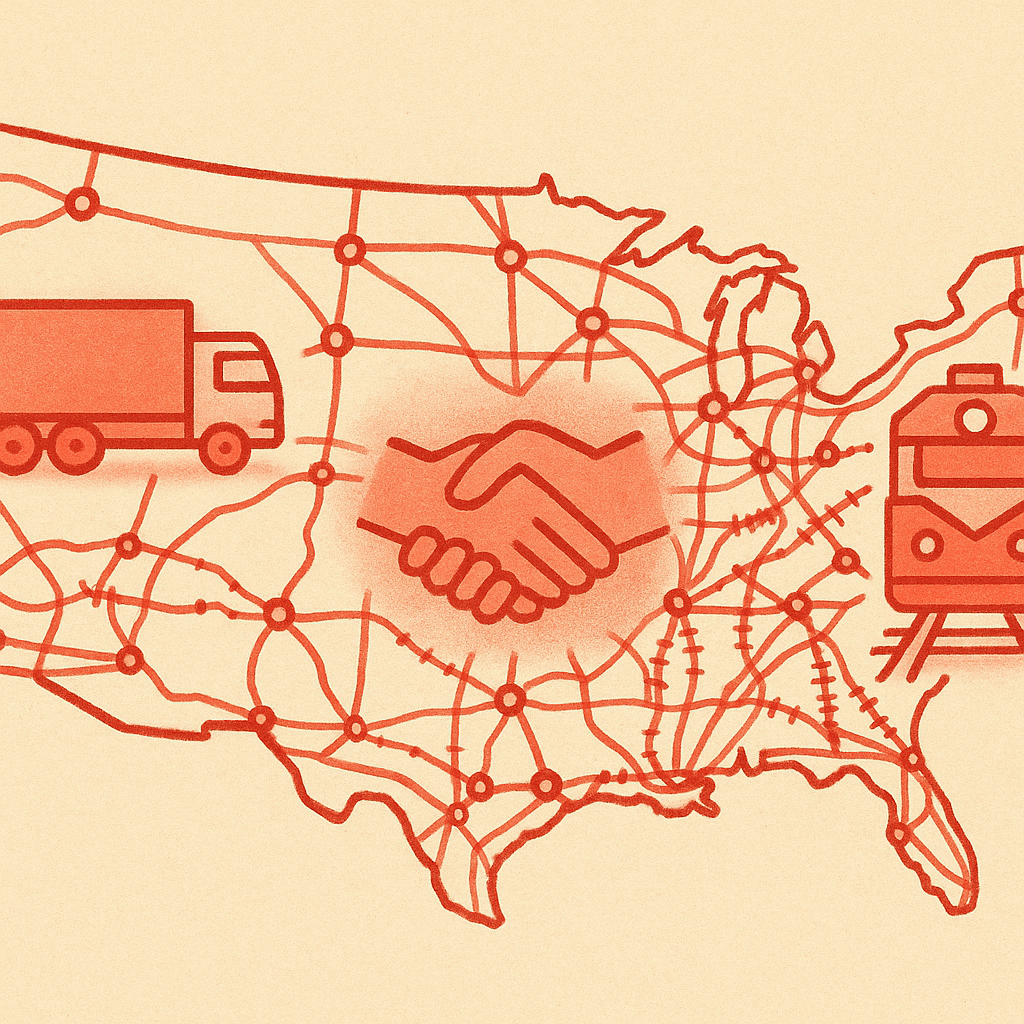
The freight and logistics industry is seeing big changes to its rules, jobs, and safety standards. A recent Texas court decision now protects companies from being blamed for trucking accidents if they just hire other carriers and don't control them. There's also a new program to help military veterans get trucking jobs more easily. Lawmakers are working on new train safety laws and updating rules to help build faster, quieter trains across the country. All these changes aim to make moving goods safer, faster, and easier for everyone involved.
What are the latest legal, workforce, and regulatory changes affecting the freight and logistics industry?
Recent changes in the freight industry include a Texas court ruling limiting shipper liability, federal initiatives expanding veterans' access to trucking careers, and new rail safety legislation. Additionally, high-speed rail regulations have been modernized, all aiming to improve safety, workforce development, and industry efficiency.
The freight and logistics industry continues to evolve through significant legal decisions, workforce initiatives, and regulatory reforms that reshape how goods move across America. Recent developments from courts, federal agencies, and Congress demonstrate the sector's dynamic response to safety concerns, labor shortages, and infrastructure modernization needs.
Texas Court Limits Shipper Liability
In a landmark decision issued May 15, 2026, the Supreme Court of Texas ruled in In re Home Depot U.S.A., Inc. that "passive shippers" who simply hire federally regulated motor carriers to transport ordinary goods do not owe a duty of care to the motoring public. The court found that Texas law does not impose liability on shippers who neither control carrier operations nor create risk through their shipping activities.
This ruling carries substantial practical implications for the freight industry. Companies that routinely contract with independent motor carriers for standard shipping services are now shielded from liability in trucking accidents unless their own conduct created the hazard or they exercised direct control over the carrier's operations. The court explicitly rejected claims that would "transform the commonplace act of shipping goods into a basis for sweeping tort liability untethered from control, conduct, and risk."
The decision affects thousands of businesses across Texas that depend on third-party carriers for freight movement. By distinguishing between passive customers and parties with operational control, the court created a clearer liability framework for commercial shipping relationships in one of America's largest freight markets.
Federal Initiative Expands Veteran Access to Trucking Careers
The DOT announced the Freedom Haulers campaign on July 24, 2026, with the kickoff event occurring on July 30, 2026, to recruit military veterans into the trucking workforce. The interagency effort, led by Transportation Secretary Sean P. Duffy, addresses persistent driver shortages while providing career pathways for transitioning service members.
A critical component of Freedom Haulers involves the FMCSA's Commercial Driver's License skills-test waiver program for veterans. A significant number of service members and veterans have utilized the waiver program, which allows those with qualifying heavy-vehicle military experience to skip the CDL road test.
The campaign extends beyond veterans with direct driving experience. New training pathways help service members without heavy-truck backgrounds obtain CDL certification through programs including Even Exchange, SkillBridge, and Registered Apprenticeship options.
Seven additional states - Alabama, Arkansas, Florida, Indiana, Louisiana, Maryland, and Wyoming - joined the Even Exchange program as of July 30, 2026, bringing total state participation to 34. This program creates streamlined CDL pathways specifically designed for veterans transitioning to civilian freight careers.
Rail Safety Legislation Returns to Congress
According to industry reports, key provisions being considered address long-standing safety concerns including enhanced detection systems, inspection standards, hazmat restrictions, emergency response support, and information sharing requirements. The proposed legislation also reportedly establishes reimbursement mechanisms for emergency responders deployed to derailment incidents and increases civil penalties for safety violations. Companion bills in the House address train length, weight limits, track standards, speed restrictions, and blocked crossing procedures.
The two-person crew requirement remains a focal point of rail safety policy. According to industry reports, legislative proposals seek to codify crew standards in federal statute.
High-Speed Rail Regulatory Modernization
On July 24, 2026, DOT announced Freedom Haulers, an interagency campaign to recruit veterans into trucking. According to industry reports, regulatory reforms are being developed to facilitate high-speed rail development in the United States, with new frameworks being considered for trains operating at various speeds and approval pathways for advanced systems including magnetic levitation technology.
Industry reports suggest that regulatory reforms could save rail developers significant costs over time by eliminating outdated requirements that slow project approvals. This comes as surface transportation programs face upcoming reauthorization considerations, making rail policy a major priority.
According to industry reports, the FRA has been working on multiple rules in a deregulatory package aimed at modernizing rail operations. These changes reportedly allow electronic posting of certain records, update enforcement procedures, and codify longstanding operational waivers that had required repeated individual approvals.
Industry-Wide Implications
These developments collectively address critical challenges facing freight and logistics operations. The Texas liability ruling provides legal clarity for shipping relationships, the Freedom Haulers initiative tackles workforce shortages through veteran recruitment, and rail reforms balance safety improvements with operational efficiency.
As Congress considers rail reauthorization and the industry adapts to new liability frameworks, freight stakeholders face a period of significant regulatory transition. The coordination between federal agencies, state governments, and industry participants will determine how effectively these policy changes translate into safer, more efficient freight movement across American supply chains.