
Freight Market Resurgence: Capacity Constraints Drive Rates Upward
Freight market rates are surging due to capacity constraints, not just demand. Spot rates exceed contract rates, signaling a rebalancing.
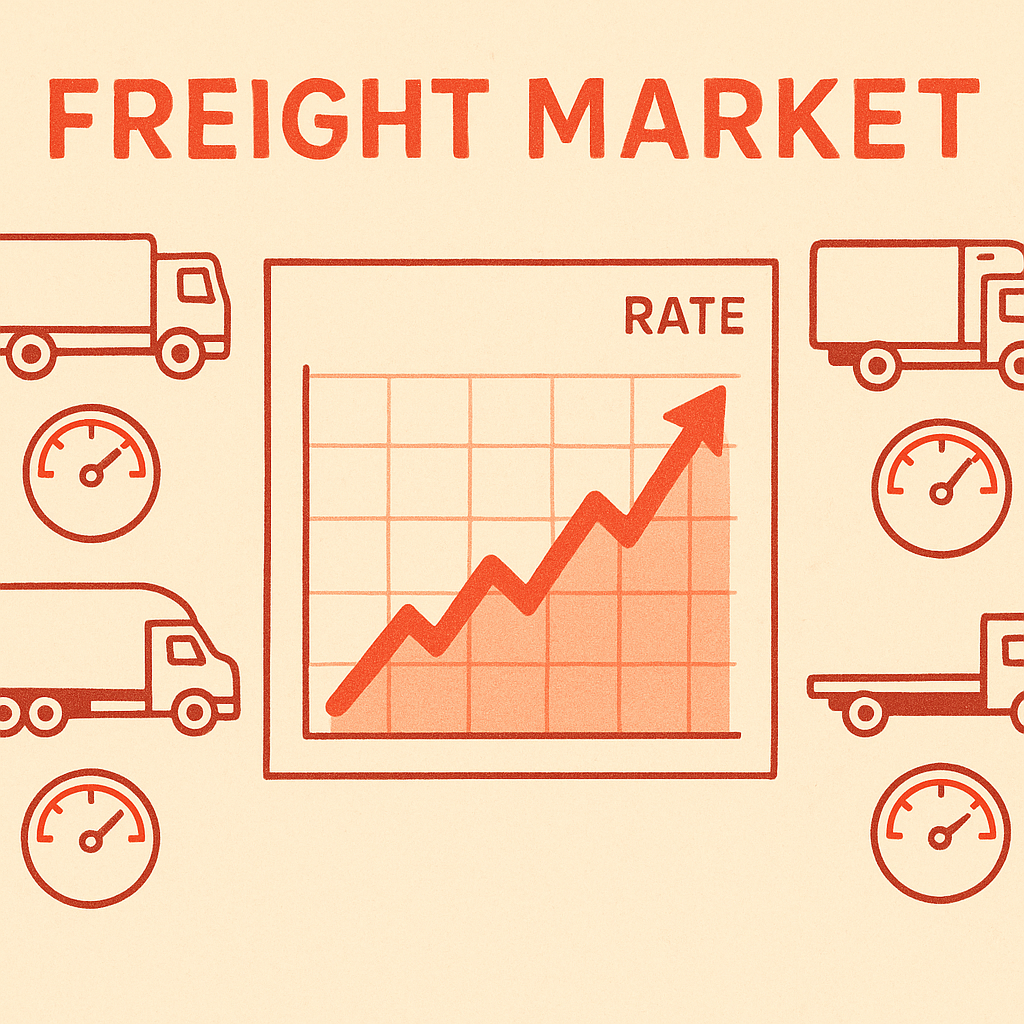
According to industry reports, trucking freight rates are rising primarily due to capacity constraints rather than surging demand. New rules and fewer drivers make it harder for trucking companies to keep up, so rates for moving goods by truck are rising everywhere. Costs for things like driver pay, fuel, and insurance keep getting higher, putting even more pressure on prices. Some areas and types of trucks, like flatbeds and reefers, are seeing bigger price jumps. This all means shipping things by truck will cost more, making things more expensive for everyone, especially small businesses.
Why are trucking freight rates rising?
According to industry reports, trucking freight rates are rising primarily due to capacity constraints, not surging demand. Tightened driver supply, regulatory changes, and increased operating costs - such as higher wages, diesel prices, and insurance - have reduced carrier availability, pushing both spot and contract rates upward across all major equipment categories.
The trucking freight market is showing renewed strength as live rate benchmarks from Freight Data Watch reveal upward movement across all major equipment categories. Industry reports indicate spot rates are trending higher across dry van, reefer, and flatbed categories, with corresponding contract rates also moving upward.
Supply-Side Pressure Drives Market Tightness
The firming rate environment reflects a market increasingly shaped by capacity constraints rather than surging freight demand. Industry analysis from ACT Research points to driver availability falling sharply while regulatory and enforcement changes tighten the market faster than freight demand alone would suggest. Federal enforcement actions targeting non-domiciled commercial driver's licenses and related compliance rules have materially reduced the effective carrier pool, creating upward pressure even in the absence of dramatic freight volume growth.
Carrier exits continue to reshape the competitive landscape. RXO's market assessment indicates that supply-side constraints from carrier attrition - rather than macroeconomic demand spikes - serve as the primary force elevating rates. This capacity erosion has contributed to spot truckload rates moving above contract rates, a reversal that signals fundamental market rebalancing.
Operating Cost Inflation Reinforces Rate Increases
| Cost Component | Market Impact |
|---|---|
| Driver wages | Upward pressure from CDL restrictions tightening supply |
| Diesel fuel | Rising fuel costs adding cost pressure |
| Insurance & compliance | Rising regulatory burden increasing baseline operating costs |
| Tender rejections | Elevated rejection rates forcing shippers into higher-priced spot markets |
Truck operating expenses continue climbing across multiple categories. Restrictions on commercial driver's licenses are tightening both carrier and driver supply, translating directly into upward wage pressure. While diesel prices represent one input cost factor, market analysis from C.H. Robinson emphasizes that the broader cost structure - including insurance, compliance burdens, and reduced driver elasticity - is creating upward pressure on transportation costs.
According to industry data, load-to-truck ratios have shown significant variation, with national dry van ratios reported at 9.0 in late March/early April and 7.73 for March, according to Freight Data Watch's market overview. These metrics underscore how available capacity has tightened relative to freight availability, giving carriers improved pricing leverage after an extended period of rate depression.
Spot truckload rates have moved above contract rates, marking a significant shift in carrier pricing power.
Regional Variations and Equipment-Specific Dynamics
The national rate picture masks meaningful regional and equipment-type variation. Flatbed capacity commands the highest premium in both spot and contract markets, reflecting specialized equipment requirements and more concentrated demand patterns in construction, energy, and manufacturing sectors. Reefer rates maintain their traditional premium over dry van due to temperature-control requirements and more stringent equipment standards.
Contract rate movements typically lag spot market changes, as negotiated agreements spanning 12-month terms adjust more gradually to shifting market conditions. Industry forecasts project spot truckload rates rising just over 17% year-over-year, with contract rates climbing more moderately at approximately 5.7% year-over-year. This spread between spot and contract creates strategic pricing decisions for shippers evaluating commitment levels against market volatility.
Broader Supply Chain Implications
Rising transportation costs inevitably flow through supply chains with varying lag times. Higher freight rates increase landed costs for both imported and domestically sourced goods, creating margin pressure for shippers and potentially contributing to consumer price inflation. Categories with high transportation intensity relative to product value - including retail merchandise, grocery distribution, and bulk commodities - face the most direct exposure.
According to industry analysis, the freight environment is inflationary for logistics rather than disinflationary, with capacity tightness and carrier discipline as the strongest upward drivers.
Tight capacity conditions also reduce routing stability and service reliability. When carriers become more selective about accepted loads, shippers experience higher tender rejection rates and route-guide failures, forcing freight into secondary or tertiary carrier networks at premium rates. This dynamic increases both transportation costs and lead-time variability, complicating inventory planning and potentially requiring higher safety stock levels.
Smaller shippers and cost-sensitive businesses face disproportionate challenges in this environment due to limited bargaining power and fewer alternative routing options when preferred carriers decline tenders. The combination of higher base rates, reduced capacity access, and service disruptions can materially impact operating margins for businesses without scale advantages or diversified carrier relationships.
Market Outlook and Strategic Considerations
Industry reports suggest the current rate environment may persist based on structural capacity factors. Weather-related disruptions, seasonal demand patterns, and continued regulatory enforcement will likely create additional short-term volatility around the underlying upward trend. Localized demand pockets in regions such as California, Arizona, and Texas may experience even stronger spot conditions than national averages suggest.
Shippers navigating this environment face strategic choices between locking in contract rates that provide budget certainty versus maintaining spot market flexibility that could capture rate softness if capacity loosens. The spot-versus-contract spread, currently favoring contract commitments, will continue evolving as market participants adjust to the new pricing paradigm. Carriers, meanwhile, are leveraging improved pricing power after years of margin compression, selectively accepting freight and maintaining rate discipline even as some demand indicators remain modest.
Freight Data Watch's dashboard provides real-time visibility into these shifting dynamics, combining multiple data inputs including construction activity, retail sales, port volumes, agricultural shipments, manufacturing output, and energy sector demand. This multi-source approach offers market participants granular insight into the supply-demand balance driving rate movements across equipment types and geographic markets.