
Global Freight Market Update: Dry Bulk Headwinds Amidst Tanker Stability and Regional Variances
Global freight market update: dry bulk faces headwinds; product tankers stable. Regional variances & rising fuel costs impact rates.
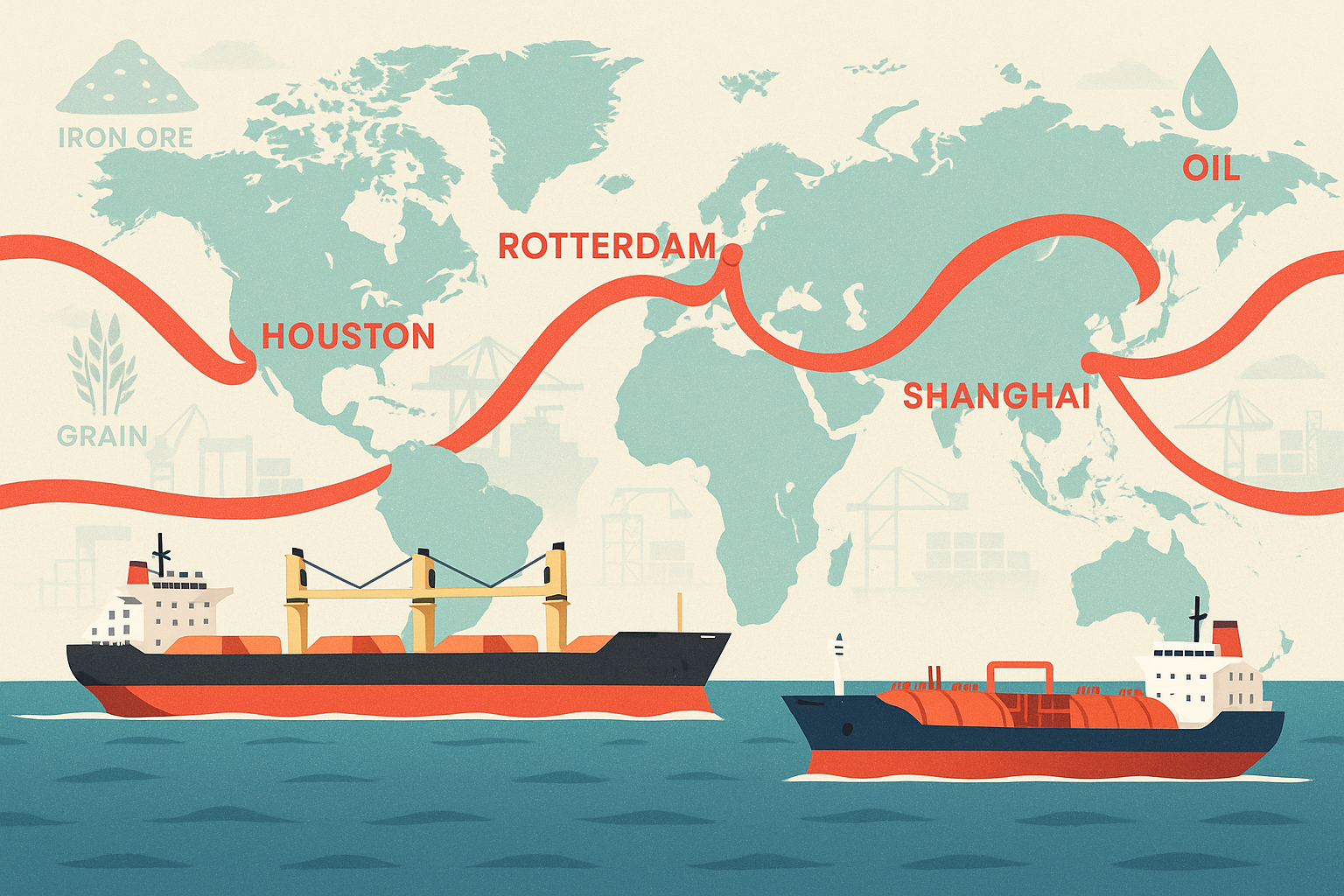
In 2026, the global freight market sees big drops in dry bulk shipping rates because there are too many ships and not enough cargo, especially for iron ore and coal. Tankers that move products like gasoline are doing better, thanks to strong demand from Asia and more US exports. In Europe, shipping is mixed - some routes are slow while others pick up with more grain and fertilizer moving around. High fuel costs, port congestion, and longer travel routes make things tougher, especially for smaller ships. The dry bulk market might recover later if more old ships are scrapped and demand picks up, but for now, there's still a big gap between too many ships and not enough goods to move.
What is the current outlook for the global freight market in 2026?
The global freight market in 2026 is marked by declining dry bulk rates due to oversupply and weaker demand, while product tankers show moderate strength from robust Asian demand and US exports. European coaster markets are mixed, with port congestion and regional variances shaping short-term trends. Learn more about The global freight market outlook for 2026, focusing on the divergence between the struggling dry bulk sector and the more stable product tanker market, alongside regional variances and overarching economic factors.
Dry Bulk Sector Faces Headwinds Across All Segments
The global dry bulk shipping market is experiencing a pronounced slowdown as rates decline across all major vessel categories. Capesize vessels, traditionally the largest earners in the sector, have seen rates drop approximately 5-7% week-on-week, driven by weaker demand for iron ore and coal cargoes from key exporters Brazil and Australia. The post-Lunar New Year period has brought a typical seasonal fade in demand, compounded by high fleet growth of around 4% year-on-year.
Smaller vessel segments are not immune to these pressures. Panamax rates continue to slip on softening grain trades, while supramax and handysize vessels face intensifying competition from overcapacity. The Baltic Dry Index components reflect this broad-based weakness, with minor rate erosion particularly visible in European short-sea trades where vessel supply continues to outpace demand.
Despite the current downturn, market fundamentals point toward a potential rebalancing by mid-2026. Industry analysts project ship demand growth of 2-3% for the year, supported by longer average sailing distances as iron ore and bauxite shipments from the South Atlantic to Asia increase. However, fleet supply is expanding at a faster pace of 2.5%, with 42 million deadweight tons in deliveries representing the highest net growth in 14 years. This supply-demand imbalance continues to exert downward pressure on freight rates across the sector.
Product Tankers Provide Bright Spot in Otherwise Stable Market
The tanker sector presents a contrasting picture to dry bulk, with overall stability punctuated by selective strength in product carriers. Medium-range (MR) and long-range (LR1) product tankers have posted rate increases of 2-4% on key routes, benefiting from robust clean product demand in Asia and surging US Gulf exports. American gasoline exports have climbed 10% year-on-year, providing sustained cargo volumes for product tanker operators.
Crude tanker rates remain largely flat amid ongoing OPEC production cuts, with VLCC (Very Large Crude Carrier), Suezmax, and Aframax segments holding steady. Geopolitical tensions in key shipping lanes continue to support baseline rates, while refinery margins provide favorable conditions for product movements. The tanker market's relative strength compared to dry bulk reflects the more balanced supply-demand dynamics in oil and refined products transportation.
The divergence between crude and product tanker performance highlights how refined petroleum demand is outpacing crude oil movements in the current market environment.
European Coasters Navigate Mixed Conditions
European short-sea and coaster markets are experiencing varied fortunes depending on specific routes and cargo types. Intra-Mediterranean trades have softened by 1-2%, reflecting broader dry bulk weakness and reduced industrial activity in Southern European ports. Conversely, Baltic and North Sea routes have gained approximately 1% as grain and fertilizer repositioning creates localized demand spikes.
Port congestion at major hubs including Rotterdam and Antwerp has added volatility to the coaster segment, with vessels experiencing delays that effectively tighten available capacity. Weather disruptions during the winter months have compounded these challenges, while the ongoing effects of Red Sea rerouting continue to influence European shipping patterns. Larger vessels diverted from Suez Canal transits create ripple effects throughout regional feeder and short-sea networks.
The handysize segment, which dominates European coastal trades, faces particular pressure from the overall softening in dry bulk fundamentals. However, specific cargo movements - particularly agricultural products and construction materials - provide pockets of strength that prevent a uniform rate collapse across all European coaster routes.
Broader Market Forces Shape 2026 Outlook
Several overarching factors are influencing freight markets across all segments. Diesel and bunker fuel costs have surged 15% year-on-year, constraining effective capacity as operators reduce speeds to manage fuel expenses. This cost pressure is particularly acute for smaller vessels with thinner operating margins. Meanwhile, tariffs and surcharges related to Red Sea diversions continue to pressure spot rates, as the additional sailing distances and insurance costs work their way through the rate structure.
| Market Segment | Rate Change | Primary Drivers |
|---|---|---|
| Capesize | -5% to -7% | Weak iron ore/coal demand, high fleet growth |
| Panamax | Minor decline | Softening grain trades, overcapacity |
| Supramax/Handysize | Minor decline | Competition from excess vessels |
| Product Tankers (MR/LR1) | +2% to +4% | Strong Asian demand, US exports |
| Crude Tankers (VLCC) | Flat | OPEC cuts, geopolitical tensions |
| European Coasters | Mixed (-2% to +1%) | Route-specific grain/fertilizer movements |
Port congestion at Shanghai and Rotterdam, combined with blank sailings, continues to tighten effective capacity despite orderbooks approaching 7% for bulk carriers.
Looking ahead, the dry bulk sector anticipates a gradual rebalancing as scrapping activity potentially increases if weak rates persist. The tanker market faces potential upside from energy demand recovery, though the record 419 tanker deliveries expected in 2026 - including 146 medium-range product tankers - may cap rate gains. Intermodal shifts driven by truckload market tightness add indirect pressure across maritime segments as shippers seek alternative transportation modes.
The global shipping market value for dry bulk alone is projected to reach $181.57 billion in 2026, with Asia Pacific maintaining a 53.22% share. China's iron ore imports and India's infrastructure-driven demand remain critical demand pillars, while US grain and coal exports from Gulf Coast ports support transatlantic trades. However, the path to rate recovery depends heavily on how quickly the current supply overhang can be absorbed through scrapping, operational adjustments, and demand growth from longer sailing distances.