
Highway Haunts: Unearthing the True Terrors of Long-Haul Trucking
Unearth true terrors of long-haul trucking! Explore 9 spooky stories, phantom convoys, and CB radio mysteries in this horror podcast episode.
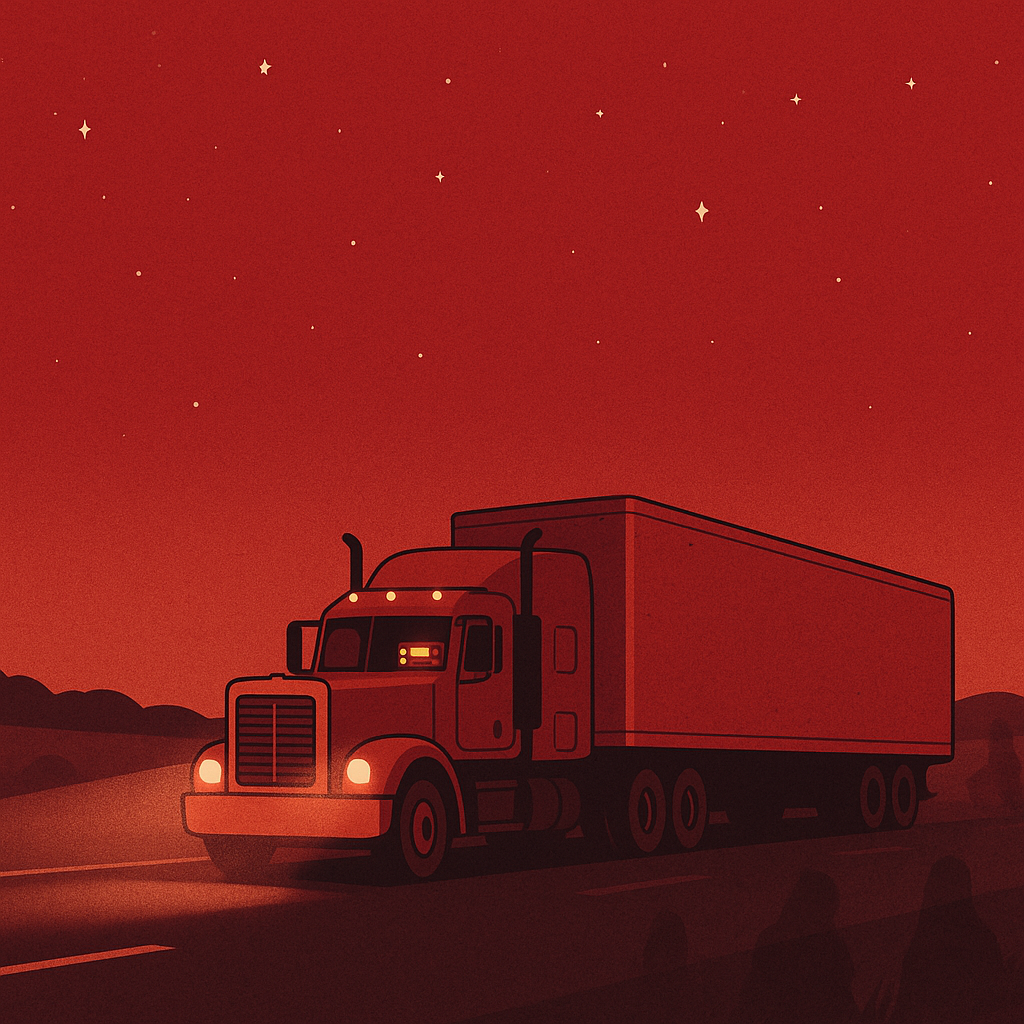
Trucker horror podcasts tell spooky stories from the lonely highways, mixing real dangers with creepy legends and CB radio chatter. These shows pull listeners in by using the true, scary moments drivers face - like ghostly warnings or strange voices at night - making the fear feel real and close. The stories are like modern campfire tales, shared by truckers to bond and warn each other, but now anyone can listen. With simple sounds and gripping voices, these podcasts make you feel like you're right there in the dark with the driver. They are special because the terror comes from everyday work, turning normal drives into something mysterious and unforgettable.
What makes trucker horror podcasts so compelling?
Trucker horror podcasts captivate listeners by blending real-life experiences of isolation, darkness, and danger on the highway with chilling storytelling. Using authentic trucker settings, CB radio moments, and occupational folklore, these podcasts deliver immersive, true-story horror that taps into universal fears and unique road culture.
The long-haul highway has always been fertile ground for unsettling tales. When isolation, fatigue, and darkness converge on remote stretches of asphalt, the line between reality and imagination can blur. A podcast episode compiling nine true trucker horror stories taps into this tradition, weaving together spooky highway experiences and mysterious CB radio moments into a narrative that prioritizes chills over comedy.
This format fits comfortably within a broader trend in podcasting toward story-first, niche content that emphasizes personality and immersion rather than purely informational delivery. The medium itself has matured dramatically. As of mid-2026, there are an estimated 4.7 million registered podcasts worldwide, with Apple Podcasts hosting more than 123 million episodes. The sheer scale of the ecosystem means creators must carve out distinct identities, and horror storytelling rooted in occupational folklore offers exactly that kind of specificity.
The Appeal of Trucker Horror Stories
Truck drivers occupy a unique cultural position. They spend long hours alone, navigate unfamiliar roads at night, and communicate through CB radio, a medium that carries its own mythology of cryptic warnings and disembodied voices. These elements make trucking a natural setting for eerie narratives. The stories themselves draw from recurring motifs: phantom convoys that vanish without a trace, rest-stop stalkers lurking in the shadows, fake police officers pulling drivers over on desolate highways, and navigation glitches that send trucks down impossible routes.
These themes are not new. They echo classic urban legends, but the trucking context gives them fresh weight. A hitchhiker who disappears might be a ghost story anywhere, but when told from the cab of an 18-wheeler on a moonless night, the isolation amplifies the dread. Similarly, cargo-related horror, whether it involves hazmat incidents or disturbing discoveries in a trailer, speaks to the real anxieties drivers face about what they haul and where it takes them.
Many of these stories circulate widely on YouTube and Reddit, often framed as "true" accounts. Titles like "9 Most Terrifying TRUE Trucker Horror Stories" and "Scary Trucker Stories for a Long Night on the Road" signal a blend of entertainment and folklore rather than verified journalism. The stories function as modern campfire tales, shared and reshaped by a community that understands the setting intimately.
CB Radio as a Narrative Device
The inclusion of CB radio moments in the episode adds authenticity. CB culture has long been associated with highway communication, peer-to-peer warnings, and the kind of informal network that predates smartphones and GPS. For decades, truckers have used CB channels to share road conditions, alert each other to speed traps, and occasionally swap strange encounters. The medium's crackling, low-fidelity audio and the anonymity of the voices on the other end make it an ideal vehicle for unsettling storytelling.
When a story involves a voice on the CB warning of something ahead, or a conversation that turns inexplicably sinister, it draws on the real experience of radio communication in isolated environments. The device is believable because it reflects actual practice, even when the story itself is dramatized or retold for effect.
Podcast Production and Storytelling Trends
Producing a horror podcast centered on true stories requires careful attention to structure and tone. According to industry reports, effective horror podcasting emphasizes scripting episodes before recording, organizing content around clear narrative beats, and using sound design sparingly but intentionally. Overloading an episode with effects can distract from the story itself. Instead, the goal is to let the narrative create tension, with music and ambient sound reinforcing atmosphere rather than overwhelming it.
For a trucking-horror episode, the production approach might involve first-person narration to create intimacy, minimal sound effects to avoid melodrama, and pacing that keeps the listener engaged without dragging. Episodes that run too long risk losing attention, so many creators aim for 15 to 20 minutes per story or split longer cases across multiple episodes.
The current podcast landscape also reflects a shift toward multi-format consumption. Video podcasting has become a major trend, with platforms like YouTube, Spotify, and Apple pushing creators to offer both audio and video versions. This matters for horror content because visual elements, such as thumbnails and short clips, can improve discoverability and shareability. A spooky trucking story that works well as audio might also perform strongly as a video with minimal on-screen visuals, letting the narration and sound carry the experience.
Audience and Cultural Context
Podcast audiences in 2025 and 2026 are broad and mainstream. According to Edison Research's The Infinite Dial 2025, 70% of Americans age 12 and older have listened to a podcast, and 55% are monthly consumers. Monthly listeners skew toward higher-income and more educated demographics, with strong representation across age groups: 66% of 12-34-year-olds, 61% of 35-54-year-olds, and 38% of those 55 and older consume podcasts regularly.
Horror and fiction podcasts tend to perform well in audio-first formats. According to industry reports, fiction podcasts are consumed as audio a significant portion of the time, at higher rates than many other genres. This suggests that narrative-driven horror content, such as a trucker story compilation, aligns well with listener preferences for immersive, sound-focused experiences.
Trucking podcasts, while not tracked as a separate genre in most industry reports, likely draw from the same educated, working-age adult audience that dominates podcast consumption overall. These shows often serve professional communities, including drivers, fleet managers, and logistics workers, but they can also attract listeners interested in road culture and occupational storytelling.
The Role of Folklore and Community
At its core, a trucker horror podcast is a form of occupational folklore. Truck drivers have always shared stories, whether through CB radio, at truck stops, or online forums. These narratives serve multiple functions: they entertain, they warn, and they build a sense of shared identity. A podcast that compiles these stories formalizes the tradition, packaging it for a wider audience while preserving the voice and perspective of the drivers themselves.
The stories may be embellished or fictionalized, but they resonate because they reflect real experiences. Long-haul truckers do encounter dangerous situations, from severe weather to brake failures to unsettling human behavior at isolated stops. The horror element often emerges from the vulnerability of being alone in a high-stakes environment, where help is far away and the stakes are life and death.
Format and Discoverability
In the crowded podcast market, discoverability depends on clear packaging. Titles, descriptions, and episode tags help listeners find content that matches their interests. A trucking-horror episode benefits from specificity: it appeals to fans of horror, true crime, and road culture simultaneously. Transcripts and searchable metadata improve visibility, while social media clips can drive new listeners to the full episode.
The conversational, narrative format also aligns with broader industry trends. Research from the Reuters Institute notes that podcasting has shifted toward conversational and video-first formats, with creators using clips and multi-platform strategies to extend reach. A horror episode built around nine distinct stories offers natural break points for shorter clips, making it easy to promote on platforms like TikTok, Instagram, and YouTube Shorts.
Why the Format Works
The success of a trucker horror podcast lies in its ability to combine authenticity, atmosphere, and accessibility. The trucking setting provides built-in tension and credibility. The horror genre offers emotional engagement and shareability. The episodic format allows for variety without requiring a single overarching plot. And the true-story framing, whether literal or stylized, gives the content a weight that pure fiction might lack.
For listeners, the appeal is straightforward: these are stories about real people in real situations, or at least stories that feel that way. The highway is a space most people have experienced, even if only as passengers. The idea that something strange or dangerous could happen on a familiar stretch of road taps into universal anxieties about travel, isolation, and the unknown.
For creators, the format is flexible and scalable. A single episode can stand alone, or it can be part of a series. Stories can be sourced from interviews, online communities, or historical accounts. The production requirements are modest compared to scripted fiction, yet the emotional impact can be just as strong.
The Intersection of Work and Fear
What makes trucker horror stories particularly compelling is their grounding in labor. These are not ghost hunters seeking thrills or tourists stumbling into haunted houses. They are people doing a job, trying to meet a deadline, and encountering something inexplicable along the way. The horror is incidental to the work, which makes it feel more real and more invasive.
This intersection of the mundane and the eerie is a hallmark of effective horror storytelling. The best scares come not from elaborate monsters but from the disruption of normalcy. A driver who has made the same route a hundred times suddenly sees something that should not be there. A CB radio conversation turns strange. A rest stop feels wrong in a way that cannot be explained. These moments work because they could happen to anyone, and because they disrupt the routine that keeps fear at bay.
In a podcast format, this kind of horror translates well. The listener is alone, often in a car or at home, and the voice in their ear becomes a companion. The intimacy of audio makes the story feel personal, as if the driver is speaking directly to them. The lack of visuals forces the listener to imagine the scene, which often makes it more frightening than any image could be.
The Broader Podcast Ecosystem
The episode exists within a larger ecosystem that values diversity of content and voice. Podcasting has become a medium for journalism, education, entertainment, and community representation. A trucking-horror show fits into this landscape as both entertainment and subcultural storytelling, offering a window into the experiences of long-haul drivers while delivering the thrills that horror fans seek.
The industry's move toward video and multi-platform distribution means that even niche content can find an audience. A well-produced horror episode can circulate through multiple channels, reaching listeners who might never have sought out a trucking podcast but are drawn in by the horror framing. Conversely, trucking enthusiasts might discover the episode through logistics or transportation communities and stay for the storytelling.
This cross-pollination is one of podcasting's strengths. The medium rewards specificity and authenticity, but it also allows for experimentation and genre-blending. A trucker horror podcast is not purely horror, nor is it purely about trucking. It is both, and that combination creates something distinct and memorable.