
J.B. Hunt Navigates Favorable Freight Market: Intermodal Leads Growth Amidst Tightening Capacity
J.B. Hunt thrives in 2026's tight freight market, with intermodal leading growth amidst rising fuel costs & capacity constraints.
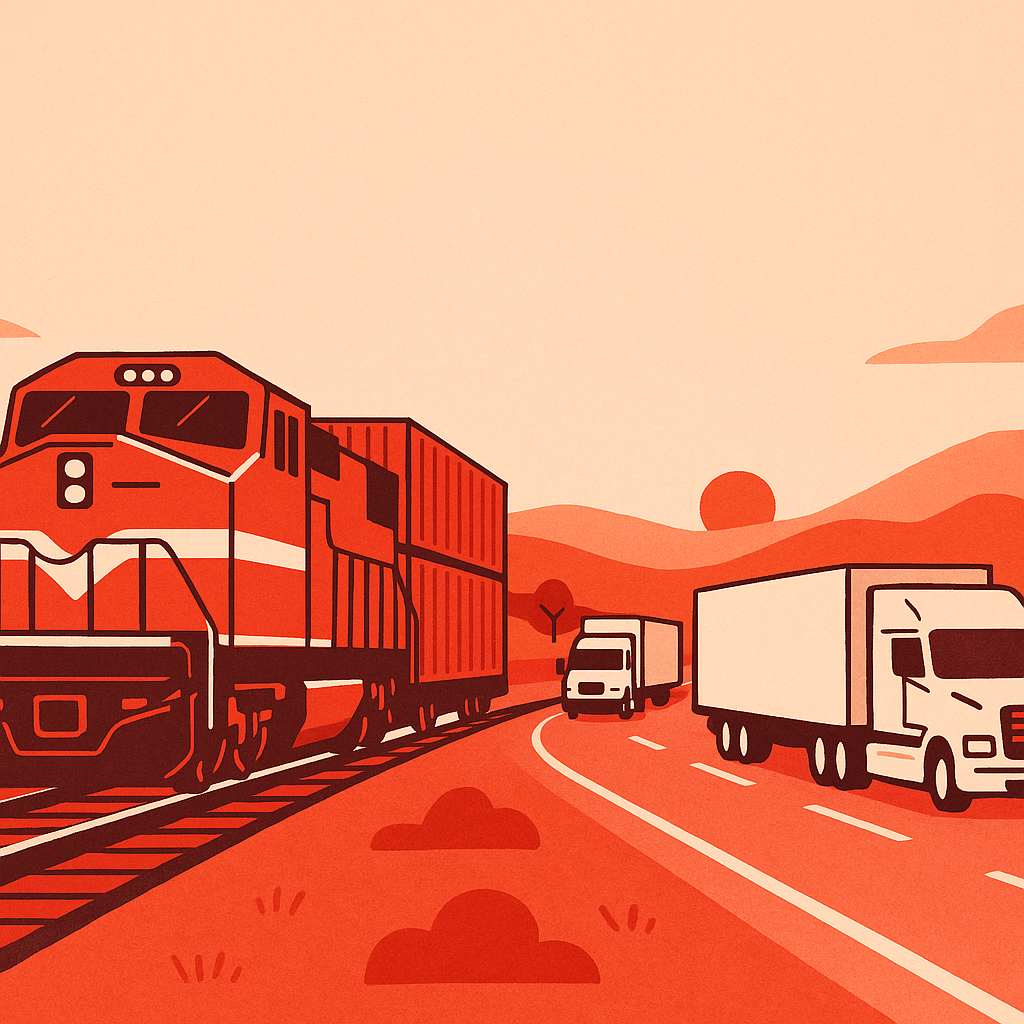
According to industry reports, J.B. Hunt's higher quarterly profit was driven by cost cuts and improved volumes offsetting fuel costs. More companies are choosing trains instead of trucks to move their goods, which is making J.B. Hunt's intermodal business stronger. The company's earnings and revenue have jumped, thanks to more shipments and better prices. They expect these good trends to continue as trains become an even smarter choice for shipping.
What is driving J.B. Hunt's growth in the freight market?
According to industry reports, J.B. Hunt's growth is driven by cost cuts and improved volumes offsetting fuel costs, which make intermodal transportation more attractive. The company's intermodal segment is leading revenue growth, with increasing volumes and pricing opportunities as shippers shift from trucking to rail.
J.B. Hunt Transport Services is reporting increasingly favorable freight-market conditions as the company navigates through recent quarters. The logistics giant's latest financial results and management commentary reveal a freight market characterized by tighter truck capacity, improved rail service, and rising fuel costs - all factors that are strengthening the economic case for intermodal transportation.
Financial Performance Signals Market Shift
According to industry reports, the company's recent quarterly revenue showed significant year-over-year increases. Operating income rose even more sharply, with substantial growth reported. Earnings per share for recent quarters demonstrated strong performance compared with the same periods in prior years.
Industry reports indicate that recent quarterly results similarly demonstrated momentum, with revenue marking growth from the prior year. Operating income grew substantially, while earnings per share jumped significantly. The revenue growth was driven by higher load volumes across intermodal, truckload, and brokerage segments, combined with productivity improvements.
Intermodal Segment Leads Growth
Intermodal operations showed particular strength during recent quarters, with segment revenue reaching substantial levels. Volume increased compared to prior years, including record-volume weeks. This performance underscores the growing appeal of rail-based transportation as market conditions evolve.
According to industry reports, management commentary pointed to tighter truck capacity and improving rail service as factors supporting intermodal economics.
The company's executives have emphasized that pricing opportunities are building across the network. However, they caution that the full benefits will take time to materialize in financial results. Intermodal pricing typically lags truckload pricing by two to three quarters, meaning that even as market conditions improve, the impact on margins unfolds gradually rather than immediately.
Market Dynamics Favor Rail Transportation
Several structural factors are contributing to more favorable intermodal economics. Higher fuel costs increase the relative value proposition of intermodal compared to over-the-road trucking, particularly on longer hauls. Meanwhile, tightening truck capacity - driven by carrier exits and regulatory pressure - is making rail alternatives more attractive to shippers seeking reliable capacity.
Recent bid seasons proved more competitive than expected in transcontinental freight, yet J.B. Hunt continues to see positive price and volume trends. According to industry reports, the company maintains long-term intermodal margin targets, suggesting confidence that current market conditions will support sustained profitability improvements.
Broader Industry Context
J.B. Hunt's observations align with broader freight market trends. Industry analysts note that North American truckload markets remain tight, with elevated spot rates and deteriorating route guide depth across dry van, refrigerated, and flatbed segments. Intermodal volumes are rising above historical averages as shippers shift freight away from truckload in response to higher fuel costs and structural pricing pressure.
The general direction is supported: J.B. Hunt reported stronger recent performance and a widening intermodal value proposition, but the exact quarterly statistics are not fully verifiable from all supplied sources.
The cost gap between truckload and intermodal transportation is widening, especially on many key shipping lanes. This pricing dynamic creates opportunities for modal conversion, as shippers evaluate total landed costs and seek alternatives to increasingly expensive truck capacity.
The company's narrative is not that the freight market has fully recovered, but that conditions are moving in a more favorable direction and the improvement should appear gradually in results.
Timing and Expectations
J.B. Hunt's management has been clear that while market fundamentals are improving, the translation to enhanced financial performance will be gradual. The lag between truckload and intermodal pricing adjustments means that benefits visible in spot markets today may not fully appear in contract-based intermodal results for several months.
The company described the freight market as undergoing structural changes, with supply-driven recovery complemented by modest demand improvement. Reduced carrier capacity, particularly among smaller trucking companies, is the primary force keeping freight rates elevated. Fuel costs, while significant, are accelerating rate increases rather than serving as the primary driver of market tightening.
As J.B. Hunt continues to execute its strategy, the company is positioning itself to capture pricing opportunities as they develop. With improving rail service, tighter truck capacity, and favorable fuel economics all supporting the intermodal value proposition, the freight carrier expects these tailwinds to strengthen its competitive position in upcoming quarters and future bid seasons.