
July 2026 Trucking Industry Update: Navigating Transformation in Safety, Technology, and Regulation
July 2026 trucking update: Enhanced safety, AI adoption, autonomous tech, new regulations, & infrastructure changes.
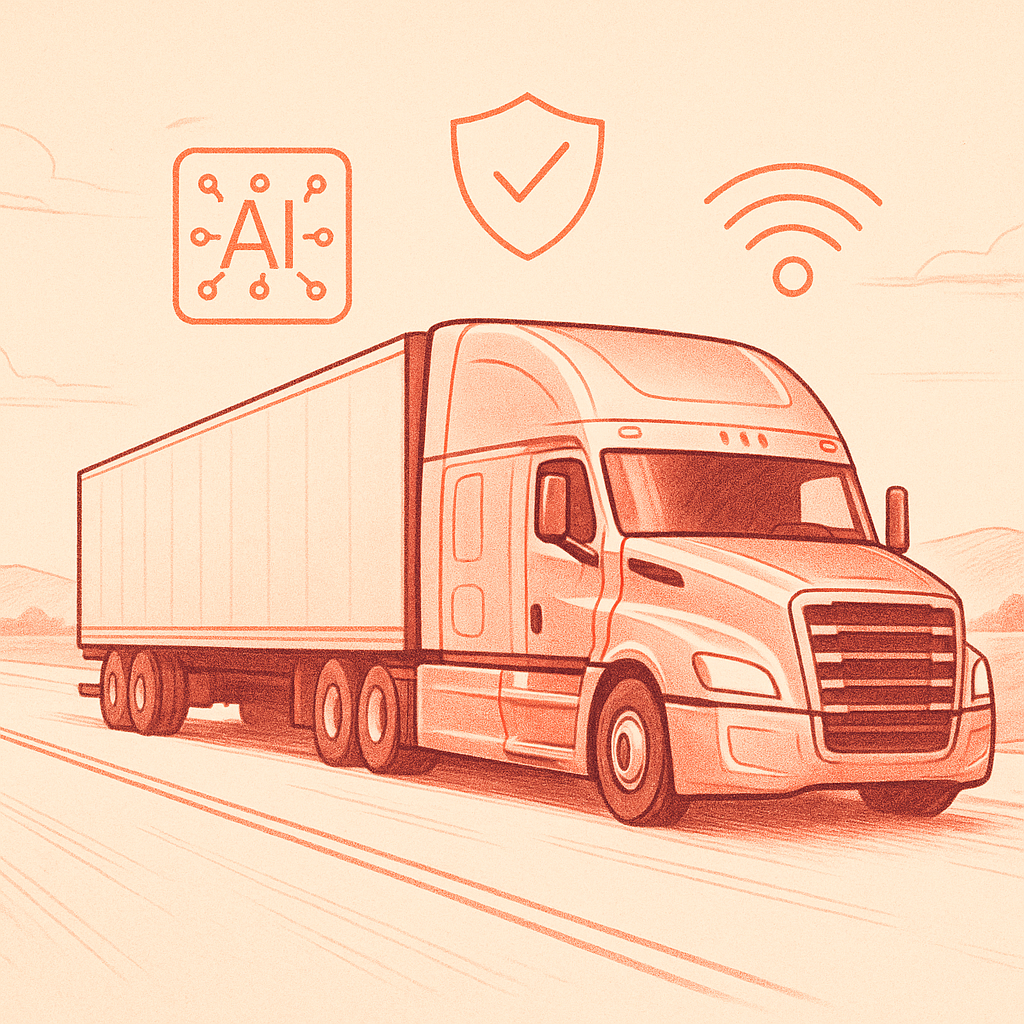
The trucking industry continues to evolve with emerging safety enforcement trends, growing adoption of AI and autonomous technologies, evolving regulatory requirements, and infrastructure developments. Companies are exploring smart technology solutions for operations and maintenance, while new regulations and infrastructure improvements are reshaping industry practices.
What are the key trends in the trucking industry?
The trucking industry is experiencing intensified safety enforcement, growing adoption of AI and autonomous technologies, evolving regulatory compliance requirements, infrastructure improvements, and greater digitalization. Fleets are increasingly leveraging AI for operations, while new regulations and upgrades in truck parking and cross-border infrastructure are reshaping industry efficiency and safety.
The trucking industry continues to evolve at a rapid pace, bringing developments across safety enforcement, technology innovation, and regulatory change. From AI-powered fleet management tools to autonomous truck deployments and stricter compliance oversight, the sector is navigating a period of significant transformation.
Safety Enforcement Intensifies Across Multiple Fronts
Enforcement activity has ramped up considerably in recent months. An Arizona inspection blitz on July 1 resulted in five truck drivers being sidelined, with officials documenting 66 violations and seven out-of-service orders. The action reflects a broader trend toward more aggressive roadside enforcement nationwide.
Operation Safe Driver Week, a coordinated enforcement campaign across the U.S., Canada, and Mexico, focused specifically on reckless and dangerous driving behaviors. Meanwhile, federal regulators are tightening oversight of electronic logging devices, with carriers now required to verify their ELD remains on the approved list as revoked devices can trigger immediate enforcement action.
English-language proficiency and non-domiciled CDL compliance have emerged as major enforcement priorities, with FMCSA and state partners cracking down harder on existing rules.
The shift toward data-driven oversight means carrier performance monitoring is becoming more frequent and more intensive, with inspection, violation, and crash data feeding into continuous safety assessments.
Autonomous and AI Technologies Move Toward Commercial Scale
The technology landscape is shifting from pilot programs to real-world deployment. Aurora Innovation launched its second-generation driverless trucks featuring lower-cost hardware designed for a million miles of operation as the company expands commercial driverless freight operations across the U.S. Sun Belt.
Meanwhile, Waabi demonstrated that its Waabi Driver can adapt to new truck platforms without additional testing or data input, a breakthrough that could accelerate autonomous technology adoption across different vehicle types.
AI Adoption Accelerates Across Fleet Operations
| Technology Application | Current Adoption Rate | Primary Use Cases |
|---|---|---|
| AI fleet tools | Growing adoption | Route planning, dispatching, maintenance diagnostics |
| Predictive maintenance | Growing rapidly | Reducing downtime, improving repair planning |
| AI dash cameras | Expanding | Driver safety coaching, incident prevention |
According to industry research, a significant portion of fleet managers are using AI, mainly for route planning and dispatching, maintenance diagnostics, and preventive maintenance. Industry experts expect substantial growth in AI-enabled fleets, marking a significant acceleration in technology adoption.
Michelin added an AI assistant to its MyConnectedFleet platform, providing fleet insights on fuel use, tire maintenance, vehicle status, and operational performance. Similarly, LytxOne platform enhancements now include AI-powered insights, asset tracking, compliance automation, and configurable privacy controls.
Noregon launched CAN Mentor, a diagnostic software tool designed to help technicians identify CAN network issues without advanced diagnostic equipment or specialized training - addressing a critical skills gap in the industry.
Driver Recognition and Industry Engagement
Keller Logistics Group and Keller Trucking launched the "Hope Hits the Highway" campaign, with 20 Keller drivers volunteering as driver ambassadors trained to carry naloxone and use it in emergencies at highway rest stops, truck stops, and roadsides. The initiative uses a wrapped 53-foot trailer to support national opioid-crisis awareness, combining driver recognition with public-safety advocacy.
Infrastructure and Market Developments
The Gordie Howe International Bridge is scheduled to open July 27 after a delay, with projections of 400 commercial vehicles per hour crossing the new span between Detroit and Windsor. The opening is expected to significantly improve cross-border freight efficiency.
Class 8 net orders surged 241% in June, with fleets grabbing remaining 2026 production slots amid improving freight conditions and emissions-rule uncertainty.
The U.S. Department of Transportation has allocated funding to add truck parking spaces in multiple states, addressing one of the industry's most persistent operational challenges. The EPA has also proposed regulatory changes regarding DEF derates, which could provide significant cost savings for truckers while maintaining environmental protections.
Regulatory Landscape Continues to Shift
Compliance is becoming increasingly digital, with more workflows moving into portals and connected platforms. Electronic DVIRs are now allowed, reducing paper-maintenance burdens for fleets. Expected updates to Part 40 testing rules include electronic signatures and improved error-correction procedures in the Drug and Alcohol Clearinghouse.
The FMCSA submitted a proposed rule to the Office of Management and Budget on June 24, though the text has not yet been released. Industry observers anticipate potential changes to automatic emergency braking requirements and side underride guard standards, though these remain under consideration rather than finalized.
Key Compliance Areas
| Compliance Area | Status | Fleet Impact |
|---|---|---|
| ELD oversight | Enhanced enforcement | Verify device certification status |
| English proficiency | Increased scrutiny | Expect more roadside checks |
| Non-domiciled CDLs | Stricter enforcement | Careful document verification required |
| Electronic DVIRs | Now permitted | Transition to digital workflows |
| Drug testing procedures | Updates expected | More online processes |
Looking Ahead
The trucking industry outlook suggests fleets are moving from isolated point tools toward data-centric, connected, partially automated operations. Zero-emission vehicle adoption continues, though at different speeds depending on route type, infrastructure availability, and fleet model. New EPA standards are becoming an immediate fleet-planning consideration, with charging infrastructure development accelerating to support electric truck deployments.
Telematics, connectivity, and software-defined vehicles are increasingly standard, with fleets using advanced systems for over-the-air updates, vehicle-control software, and integrated operations management. The shift represents a fundamental change in how trucking operations are managed, with technology enabling greater efficiency, safety, and regulatory compliance across the industry.