
Navigating Social Security: A Veteran's Guide to Trucking Income and Retirement Benefits
Veterans, navigate Social Security and trucking income. Learn how earnings limits affect benefits and optimize your financial strategy.
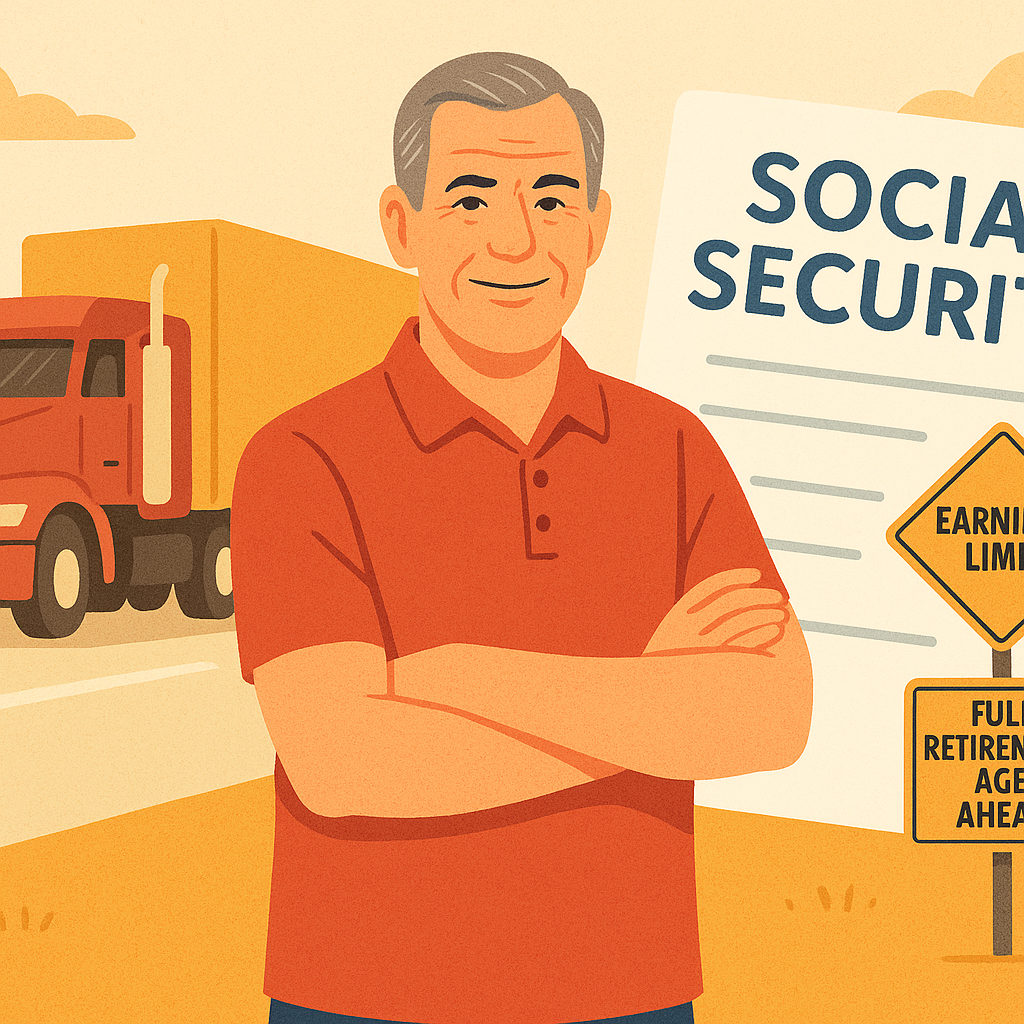
Veterans who start trucking after the military while getting Social Security before full retirement age can see their benefits cut if they earn over $24,480 a year, losing $1 from Social Security for every $2 they make past that limit. How their income is counted depends on whether they're a company driver or an owner-operator, which can change how much is withheld. Special rules let veterans save on training costs and get started faster. Once they reach full retirement age, their Social Security is no longer reduced, so many plan their trucking career to start then. Careful planning helps veterans keep more of their Social Security and make the most money overall.
How does trucking income affect Social Security benefits for veterans before full retirement age?
If a veteran starts a trucking career while collecting Social Security before full retirement age, earnings above $24,480 (in 2026) will reduce monthly benefits. Social Security withholds $1 for every $2 earned over this limit, potentially lowering total yearly benefits for working veterans.
Starting a trucking career after military service sounds straightforward - get your CDL, hit the road, and collect a paycheck. But for veterans who begin driving later in life while already collecting Social Security, the financial picture becomes more complex. Understanding how trucking income interacts with retirement benefits can mean the difference between maximizing your earnings and inadvertently reducing your monthly Social Security check.
The Social Security Earnings Test
For 2026, Social Security applies specific earnings limits to beneficiaries who work before reaching full retirement age (FRA). If you are below FRA for all of 2026, the Social Security Administration withholds $1 in benefits for every $2 you earn above $24,480. The calculation changes if you reach FRA during 2026: SSA withholds $1 for every $3 above $65,160, but only counts earnings before the month you reach FRA. Once you hit FRA, the earnings limit disappears entirely.
For a veteran entering trucking, this creates a critical decision point. New CDL-A drivers typically earn varying amounts depending on route type, freight, and endorsements, while experienced drivers often see higher earnings based on their skills and experience. A $50,000 annual wage would be $25,520 above the 2026 under-FRA limit, implying about $12,760 in benefit withholding under the $1-for-$2 formula if the earnings test applies in full.
What Counts as Income
The type of trucking work you perform matters significantly. SSA counts gross wages if you work as a company driver (W-2 employee), but only net earnings from self-employment if you operate as an independent trucker or owner-operator. This distinction can substantially affect your benefit calculations.
| Employment Type | Income Counted by SSA | Typical for New Drivers |
|---|---|---|
| Company driver (W-2) | Gross wages | Most common entry path |
| Owner-operator | Net self-employment earnings | Requires capital and experience |
| Independent contractor | Net self-employment earnings | Variable, depends on contracts |
SSA also applies a special monthly rule for self-employed individuals. Under this rule, you can be treated as retired in any month you earn $2,040 or less and do not perform substantial self-employment services. For those reaching FRA in 2026, that monthly threshold rises to $5,430. This monthly test can allow payment for specific months even when annual income is high, provided you meet the substantial-services criteria.
Veteran Resources That Reduce Training Costs
Veterans have access to programs that can significantly lower the financial barriers to entering trucking. The GI Bill can cover CDL training, apprenticeship programs, and licensing fee reimbursement, while VA Vocational Rehabilitation and Employment (VR&E) provides career counseling and training support for eligible veterans with service-connected disabilities.
The FMCSA's military skills test waiver program now operates in all 50 states and can waive the CDL skills test for qualified applicants with at least two years of safe military heavy-vehicle experience. This waiver reduces both time and cost in obtaining commercial driving credentials.
Recent federal initiatives have further streamlined veteran access to trucking careers. The Veterans' Transition to Trucking Act, passed by the House, aims to simplify VA approval of trucking apprenticeship programs, allowing interstate carriers to obtain single nationwide approval rather than navigating multiple state processes. Recent federal efforts have focused on making it easier for veterans to secure commercial driver's licenses by addressing various regulatory barriers.
Planning Your Income Strategy
For veterans starting trucking careers while collecting Social Security before full retirement age, careful income planning becomes essential to avoid unexpected benefit reductions.
The interaction between trucking income and Social Security requires strategic thinking. If you are close to reaching FRA, it may make sense to delay starting work or to carefully manage your income in the months before you reach that milestone. Remember that SSA withholds benefits in whole checks rather than partial amounts, so the reduction happens through skipped monthly payments that are later recalculated.
For those well below FRA, the decision becomes more nuanced. A veteran earning substantial income as an experienced driver would face benefit withholding under the earnings test, but would build a strong financial foundation for true retirement while also increasing their future Social Security benefit through additional covered earnings.
Income Expectations and Financial Planning
Understanding realistic income expectations helps veterans plan appropriately. Entry-level drivers typically see varying earnings in their first year, with pay gradually increasing as they gain experience, endorsements, and better routes. Veteran drivers with several years of experience commonly see higher earnings, while top earners in specialized freight or hazmat can achieve substantial annual incomes.
The Bureau of Labor Statistics reports a median annual wage of $57,440 for heavy and tractor-trailer truck drivers, providing a useful benchmark for planning purposes.
These income ranges create different retirement planning scenarios. New drivers should prioritize building emergency savings and making consistent but modest retirement contributions, especially if facing training repayment obligations or inconsistent early-career mileage. Veteran drivers with higher earnings have substantially more capacity to accelerate retirement savings and potentially catch up if they started their trucking career later in life.
Timing Considerations
The month you reach full retirement age matters significantly. SSA only applies the earnings test to income earned before that month, meaning strategic timing of when you start a trucking job or how you structure your work schedule can optimize your total income. For self-employed truckers, the monthly substantial-services test adds another layer of planning opportunity, potentially allowing benefit payments in months when you work less intensively.
Investment earnings, pensions, and VA disability compensation do not count toward the Social Security earnings limit, so veterans receiving multiple income streams should carefully track which sources affect their benefits and which do not. This complexity often warrants consultation with a financial advisor familiar with both veteran benefits and Social Security regulations.
Making the Numbers Work
Veterans considering late-career trucking transitions should calculate their specific situation before making the leap. If you are 64 years old, collecting $2,000 monthly in Social Security, and considering a company driving job paying $55,000, you would exceed the annual earnings limit by $30,520. Under the earnings test, SSA would withhold approximately $15,260 in benefits - more than seven months of payments. However, you would still net substantial income from trucking, and your future Social Security benefit would increase due to the additional covered earnings.
The calculation changes dramatically once you reach FRA. That same $55,000 trucking income would not reduce your Social Security benefits at all, allowing you to collect your full monthly benefit while earning a full trucking salary. For many veterans, this makes waiting until FRA to start trucking - or timing the start to coincide with reaching FRA - the most financially advantageous strategy.
Understanding these rules empowers veterans to make informed decisions about when to start trucking, what type of driving work to pursue, and how to structure their income to maximize total retirement security. The intersection of military service, trucking careers, and Social Security creates unique planning opportunities for those who take the time to navigate the system strategically.