
Navigating the 2026 Regulatory Roadmap: Key CDL Compliance Updates for Motor Carriers
2026 brings major CDL changes: stricter non-domiciled eligibility, digital medical certs, and state-level testing updates for carriers & drivers.
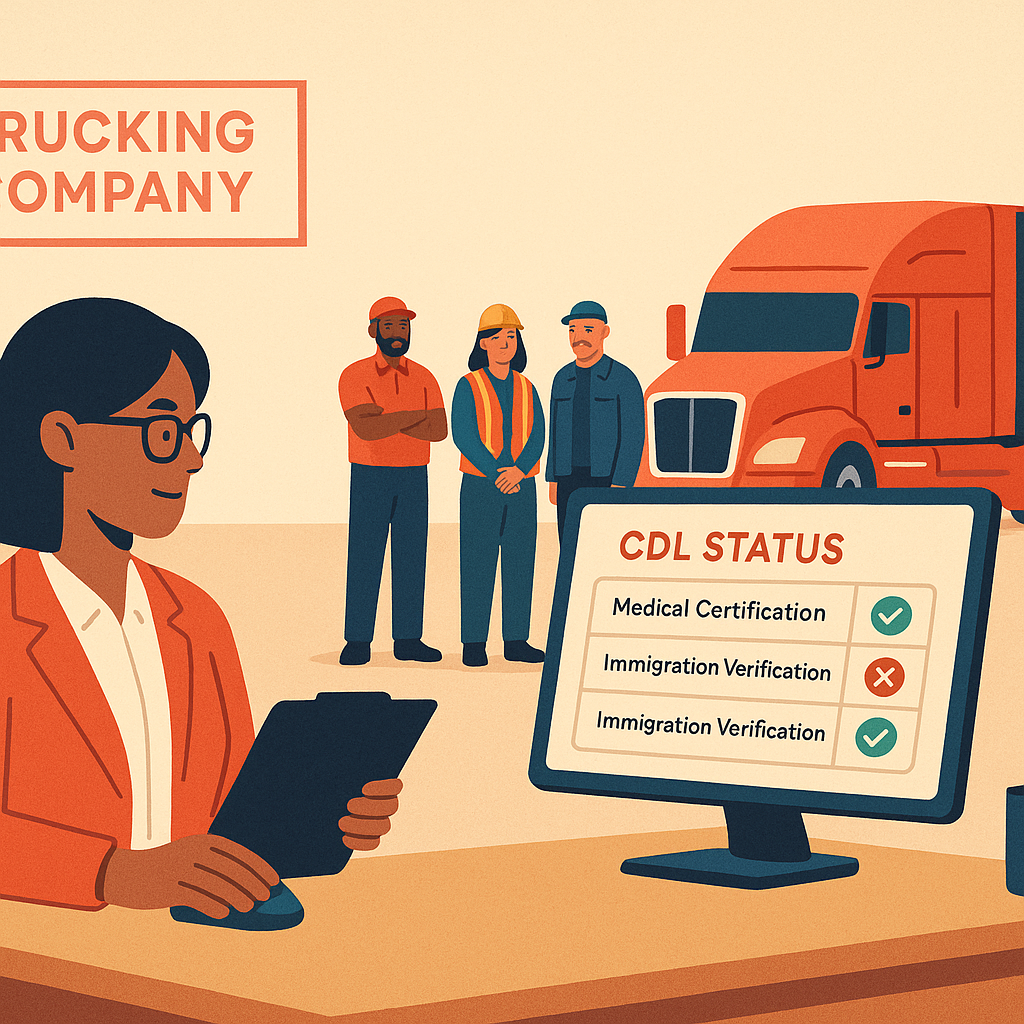
The rule requires states to verify lawful immigration status through SAVE for non-domiciled CDL transactions. FMCSA's temporary waiver ran through January 10, 2026 and allowed paper medical certificates for up to 60 days after issuance, while states continue transitioning to electronic medical certification records and CDLIS/MVR-based verification. These changes mean companies must check paperwork more carefully and might lose drivers if licenses are revoked. Both drivers and employers will need to pay close attention to these new rules to keep working without problems.
What are the key CDL compliance updates affecting motor carriers in 2026?
According to industry reports, motor carriers face significant CDL compliance changes as the confirmed 2026 change is the transition from paper medical cards toward electronic medical certification records and MVR/CDLIS-based verification. These updates tighten hiring and driver management processes.
The supported 2026 change in the cited sources is mainly the ongoing NRII transition and temporary waiver handling for medical certification proof. From stricter eligibility requirements to modernized medical certification processes, these updates demand attention from both motor carriers and drivers across the United States.
Tighter Non-Domiciled CDL Eligibility
Starting March 16, 2026, the Federal Motor Carrier Safety Administration (FMCSA) significantly narrowed who qualifies for a non-domiciled commercial driver's license. Under the new final rule, states may issue or renew non-domiciled CDL and CLP credentials only to drivers holding H-2A, H-2B, or E-2 visas. This change removes eligibility for DACA recipients, TPS holders, refugees, asylum applicants, and humanitarian parolees who previously qualified under broader guidance.
The rule affects both new issuances and renewals, meaning current non-domiciled CDL holders who don't fall into the newly eligible categories will lose their credentials when licenses expire. States must verify lawful immigration status through the SAVE system before issuing, renewing, upgrading, or even reinstating a non-domiciled credential after a medical or Clearinghouse downgrade. According to industry reports, a significant number of CDLs could be affected over five years, creating substantial pressure on driver supply in an already tight labor market.
Motor carriers employing non-domiciled CDL drivers face serious operational risk if licenses are later revoked or drivers are placed out of service during roadside inspections.
Medical Certification Transition Continues
FMCSA's temporary waiver ran through January 10, 2026 and allowed paper medical certificates for up to 60 days after issuance, while states continue transitioning to electronic medical certification records and CDLIS/MVR-based verification. The traditional practice of collecting and storing paper Medical Examiner's Certificates (MECs) is gradually being phased out for interstate CDL holders.
Medical examiners are increasingly required to transmit certification results electronically to state licensing authorities, who then update the driver's MVR. Carriers should create new procedures to obtain and review MVRs regularly, monitor medical certification expiration dates through state systems, and prepare to transition away from relying on paper MEC cards as primary proof of medical qualification. This transition requires updates to driver qualification files and internal compliance workflows.
| Verification Method | Traditional Process | Transitioning Process |
|---|---|---|
| Primary Documentation | Paper Medical Examiner's Certificate | Electronic MVR from state licensing agency |
| Carrier Responsibility | Collect and store paper MEC | Obtain and review state MVR |
| Medical Examiner Action | Issue paper certificate to driver | Transmit results electronically to state |
| Compliance Risk | Paper card loss or expiration | MVR access delays or state system errors |
Enhanced Verification Requirements
The FMCSA rule excerpts require SAVE-based lawful-immigration-status verification for non-domiciled CDL/CLP transactions. According to industry reports, some states have implemented additional CDL testing changes, with language requirements drawing attention in certain jurisdictions.
According to industry reports, some states have adjusted their non-domiciled CDL issuance procedures during transition periods, with various states reportedly reviewing existing credentials under federal guidance. These state actions complement the federal rule changes and create a patchwork of enforcement that varies by jurisdiction.
Compliance Burden Increases for Carriers
According to industry reports, regulatory changes create a more intensive compliance environment for motor carriers. Companies must now review every driver's license file to identify non-domiciled CDL holders and determine whether they fall into the narrower eligible categories. Hiring and onboarding procedures require updates to account for immigration-status verification, medical certification tracking through MVRs, and potential license downgrades or revocations.
FMCSA and state agencies are increasing their use of verification systems including SAVE, the Drug and Alcohol Clearinghouse, and integrated MVR databases to detect fraud and disqualifying records more quickly. This means carriers face more paperwork, slower onboarding timelines, and greater exposure if applicant records are incomplete or inconsistent. Smaller fleets may feel the impact fastest because they typically have fewer compliance staff and less capacity to absorb sudden driver losses.
What Drivers Should Expect
According to industry reports, commercial drivers need to prepare for enhanced verification checks. Immigration status, medical certification currency, and English language proficiency will face heightened scrutiny during both routine renewals and roadside inspections. Drivers whose status no longer qualifies under the tighter non-domiciled rules should expect renewal denials or nonrenewal notices when current licenses expire.
Failing verification checks can mean immediate loss of driving privileges during roadside enforcement, creating delays and disruptions that affect both the driver and their employer.
The shift to electronic medical certification means drivers must ensure their medical examiner properly transmits results to state licensing authorities. Any gaps or errors in this electronic transmission could result in MVR records showing expired or missing medical certification, even if the driver holds a valid paper card. Proactive communication with both medical examiners and state DMV offices becomes essential to avoid compliance lapses.
Entry-Level Driver Training Remains in Effect
According to industry reports, the Entry-Level Driver Training (ELDT) requirements established in previous years continue. All applicants for Class A or Class B CDL, passenger or school bus endorsements, and hazardous materials endorsements must complete theory and behind-the-wheel training from a provider listed on the FMCSA Training Provider Registry. Timely reporting of training completion remains mandatory, and carriers should verify that all new hires have proper ELDT documentation in their qualification files.
Industry Impact and Capacity Concerns
The combined effect of these regulatory changes points toward a smaller available driver pool and higher administrative costs across the trucking industry. With a significant number of CDLs potentially affected by the non-domiciled eligibility restrictions, carriers that rely on immigrant labor face capacity constraints and increased wage pressure. The additional verification steps and electronic compliance systems add overhead to hiring and retention processes.
For drivers who maintain eligibility under the new rules, the tighter market conditions may create opportunities through improved freight availability per truck and stronger negotiating positions. However, the transition period brings uncertainty as states implement federal requirements at different paces and enforcement intensity varies by jurisdiction. Both carriers and drivers should prioritize understanding their specific state's implementation timeline and verification procedures to avoid operational disruptions during the adjustment period.