
Navigating the Q3 2026 Fuel Surge: Strategic Responses to Escalating Diesel Costs in Trucking
Q3 2026 sees trucking fleets battle record diesel prices ($5.40/gallon). Learn strategic responses to mitigate costs & survive.
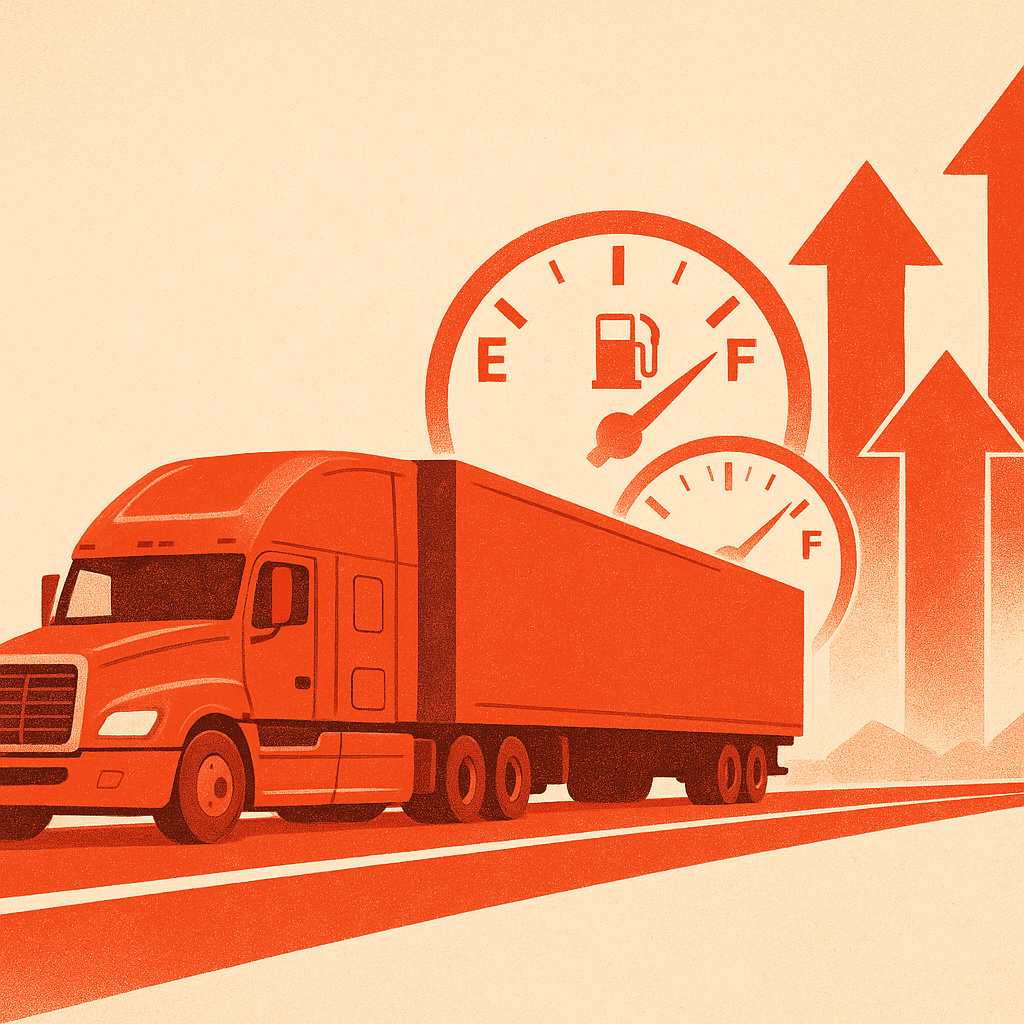
In August 2026, trucking companies in the U.S. are battling a significant jump in diesel prices, with fuel costs reaching elevated levels. This sharp rise in costs is making it really hard for many truckers, especially smaller operators, to make a profit. To survive, companies are working hard to use less fuel by planning better routes, cutting down on empty trips, keeping trucks in top shape, and training drivers to save fuel. Some are also changing how they charge for deliveries to recover fuel costs faster. Only the trucking companies that can quickly reduce fuel use and control expenses are staying strong in this tough market.
How are trucking companies responding to rising diesel prices in 2026?
According to industry reports, trucking companies are navigating elevated diesel prices in 2026 by focusing on several strategies:
1. Optimizing routes to reduce miles and idle time
2. Reducing empty miles through better load planning
3. Improving fuel efficiency with preventive maintenance and driver coaching
4. Negotiating fuel surcharges for faster cost recovery
5. Enhancing fuel purchase controls to prevent waste and theft.
The U.S. trucking industry is navigating a severe fuel-cost environment in August 2026, with national diesel prices reaching levels that put unprecedented pressure on fleet economics. Industry reports indicate that diesel prices have climbed substantially, with August 2026 diesel averaging about $5.40 per gallon, compared with about $3.70-$3.72 in August 2025, implying an increase of roughly $1.68-$1.70 per gallon.
The Scale of the Fuel Cost Surge
Industry reports indicate that diesel prices have escalated significantly from earlier in the year. For context, diesel prices have climbed substantially since early 2026, with Reuters reporting in March that the March 2026 diesel average was 4.92 per gallon, up 37.3% from March 2025. The August figures confirm that this upward trajectory has continued through the peak summer freight season.
Direct Impact on Fleet Operating Economics
Fuel represents a significant portion of total cost per mile for trucking operations. When diesel prices rise substantially, fleets see their fuel costs increase meaningfully per mile driven.
Industry reports suggest these increases hit smaller carriers and owner-operators hardest. Reuters reported that independent truckers faced profit and cash-flow strain from elevated diesel prices and weak demand. This creates a cash-flow squeeze where fuel must be purchased immediately but revenue arrives weeks later.
When diesel climbs quickly, per-mile margins tighten fast, making loads that looked profitable at lower fuel prices potentially unprofitable once current fuel costs are included.
Market Consequences and Capacity Pressure
The sustained high diesel prices are accelerating capacity exits among marginal carriers. Industry analysis indicates that higher fuel costs stress carrier margins and can shift market share toward fleets with better fuel efficiency and stronger cost controls. This dynamic is particularly visible in segments where elevated diesel costs and capacity changes are affecting pricing.
The broader freight market context adds another layer of complexity. Industry reports suggest that freight volumes remain soft even as operating costs stay elevated. This combination of weak demand and high input costs creates a particularly challenging environment for profitability.
Strategic Responses from Carriers
Fleets are deploying multiple strategies to mitigate the fuel-cost impact. The most immediate and effective measures focus on reducing gallons consumed per mile rather than simply seeking cheaper diesel:
-
Operational Controls*: Route optimization using GPS and telematics can eliminate unnecessary miles and avoid congestion. Speed management is particularly effective - every mile per hour above 65 mph can reduce fuel economy significantly. Idle reduction programs targeting excessive engine runtime during loading, unloading, and breaks can provide meaningful daily savings per truck.
-
Empty Mile Reduction*: Deadhead miles represent pure cost with no revenue offset. Carriers are using load-matching technology and better backhaul planning to cut empty repositioning moves. Even modest reductions in empty miles can translate to significant annual savings for mid-sized fleets.
The 2026 theme across the industry is that fuel cost control is no longer just about finding cheaper diesel; it is about reducing gallons burned per mile, recovering costs faster in contracts, and using data to eliminate waste at the lane and driver level.
-
Procurement Controls*: Fuel cards with network restrictions, purchase limits, and driver identification help eliminate unauthorized purchases and fuel theft. Real-time monitoring allows fleet managers to flag unusual transactions immediately.
-
Contract Adjustments*: Carriers are negotiating tighter fuel surcharge language with shorter adjustment windows, allowing costs to be recovered more quickly when diesel prices spike. Some fleets are also reviewing lane-by-lane profitability more frequently to identify routes where current fuel costs have eroded margins below acceptable levels.
Maintenance and Equipment Factors
Preventive maintenance has become a critical fuel-cost control lever. Industry reports indicate that underinflated tires can meaningfully reduce fuel economy. Clean air filters, proper wheel alignment, and well-maintained fuel systems all contribute to optimal fuel efficiency. Fleets that defer maintenance to save short-term costs often see those savings evaporate through higher fuel consumption.
Driver behavior also plays a substantial role. Telematics systems that track hard braking, rapid acceleration, excessive speed, and idle time enable targeted coaching programs. When drivers receive regular feedback tied to fuel economy metrics, many fleets report meaningful MPG improvements within the first year of implementation.
Looking at Regional Variation
Regional diesel prices can differ by market, though specific regional pricing data varies by source. West Coast markets typically see prices above the national average due to fuel specifications and distribution costs, while Gulf Coast states often enjoy lower prices due to proximity to refineries. These regional differences can meaningfully affect the economics of specific lanes and influence routing decisions for long-haul freight.
The elevated diesel price environment represents more than a temporary spike - industry analysis suggests it reflects a sustained period of high fuel costs that is reshaping trucking economics. Carriers that can effectively control fuel consumption, recover costs through pricing mechanisms, and maintain operational discipline are better positioned to navigate this challenging period. Those that cannot adapt quickly enough face margin compression that may prove unsustainable, particularly in a freight market where volume growth remains elusive.