
Navigating the Shifting Sands: DOL's Proposed IC Rule and its Impact on Trucking
DOL's proposed IC rule could reshape trucking. Learn about the 'economic reality' test, its impact on owner-operators, & CA's AB5.
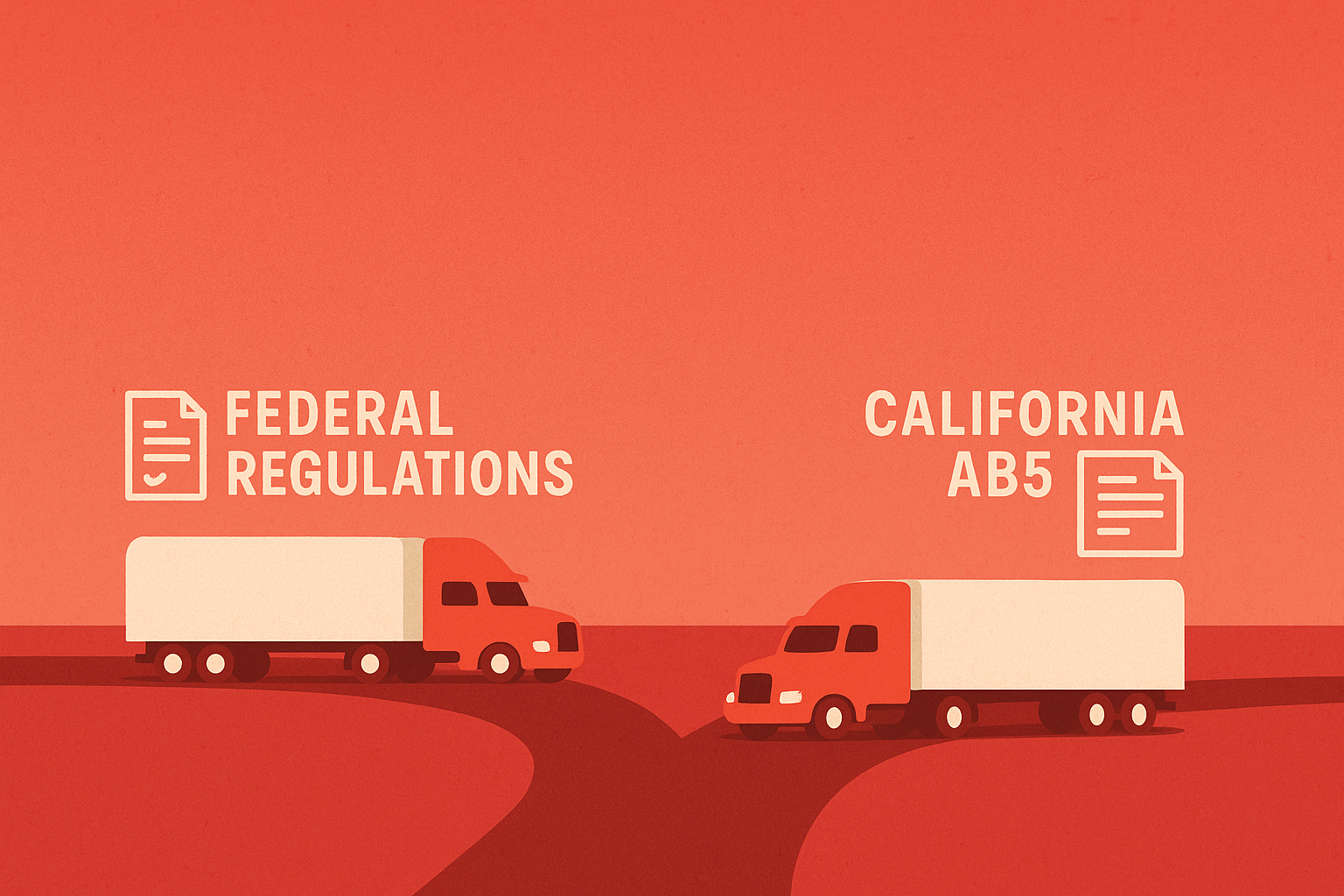
The Department of Labor wants to change how truck drivers are classified, making it clearer who's an employee and who's an independent contractor. This new rule helps truckers keep their flexibility and independence while following safety laws. It also means truckers and companies don't have to worry as much about getting in trouble for misclassifying workers. In California, though, the rules are stricter, and many drivers might be forced to become employees instead of independent contractors. These changes could affect drivers' pay, benefits, and how much control they have over their work.
What is the impact of the DOL's proposed independent contractor rule on truckers and carriers?
The DOL's proposed independent contractor rule would make it easier for trucking companies and owner-operators to differentiate between employees and independent contractors. The rule emphasizes operational flexibility, reduces misclassification risks, and clarifies that compliance with federal safety requirements does not automatically make drivers employees, preserving traditional owner-operator models.
The U.S. Department of Labor has proposed a significant regulatory shift that could reshape the landscape for owner-operators in the trucking industry. On February 26, 2026, the DOL issued a Notice of Proposed Rulemaking aimed at rescinding the 2024 Biden-era independent contractor classification rule and reverting to a modified version of the 2021 framework. This proposal represents the latest turn in a regulatory environment that has seen three different classification rules across six years, creating ongoing uncertainty for carriers and drivers navigating employment status determinations.
The Core of the Proposed Changes
This approach marks a deliberate departure from the 2024 rule's unweighted six-factor "totality of circumstances" test, which treated all factors equally and made independent contractor status more difficult to establish. The earlier framework's analysis of investment costs, which included employer expenses rather than focusing solely on worker investment, created tension with Supreme Court precedent and practical realities in the trucking sector.
Implications for the Trucking Industry
For motor carriers and owner-operators, the proposed rule maintains the existing operational model that has defined the industry for decades. The framework acknowledges that compliance with Federal Motor Carrier Safety Administration regulations - such as hours-of-service requirements, electronic logging devices, and drug testing protocols - does not automatically constitute the type of control that would reclassify an independent contractor as an employee. This distinction proves critical for an industry where safety mandates are non-negotiable.
The proposed rule would make it easier to properly differentiate between employees and those workers who work as independent contractors, emphasizing flexibility and innovation during challenging economic conditions.
One notable improvement over the 2021 rule involves provisions that previously could have allowed carriers to mandate speed limiters on contractors' trucks. The current proposal excludes this requirement, preserving greater operational autonomy for owner-operators who maintain their own equipment and business decisions.
The DOL's stated objectives include improving regulatory compliance, reducing costly misclassification litigation, and providing clearer guidance for businesses and workers alike. However, as a proposed rule still subject to public comment and finalization, it carries no immediate enforcement weight. The 2024 rule remains in effect pending the completion of this rulemaking process.
State-Level Complications: California's Divergent Path
While federal regulations may be trending toward contractor-friendly classifications, California continues to enforce one of the nation's strictest worker classification standards. The state's AB5 law, which codified the ABC test for determining employment status, creates a presumption that workers are employees unless three conditions are met: freedom from the hiring entity's control, performance of work outside the company's usual business operations, and engagement in an independently established trade or business.
| Classification Test | Federal (2026 Proposal) | California AB5 |
|---|---|---|
| Primary Framework | Economic reality test with two core factors | ABC test requiring all three prongs |
| Control Analysis | Nature and degree of control over work | Must be free from hiring entity's control |
| Business Relationship | Opportunity for profit/loss based on initiative | Work must be outside usual business scope |
| Legal Compliance Impact | FMCSA mandates may not equal control | Vehicle ownership alone insufficient for contractor status |
| Expense Obligations | Not federally mandated | Required reimbursement for all vehicle costs |
Perhaps most significantly, the statute clarifies that vehicle ownership alone does not establish independent contractor status - a direct challenge to traditional owner-operator arrangements.
To address the compliance burden this creates, California established a Construction Trucking Employer Amnesty Program running through January 1, 2029. This initiative allows carriers to reclassify previously misclassified drivers without facing penalties, provided they pay back wages and taxes, secure workers' compensation coverage, and commit to treating future drivers as employees.
The Practical Impact on Benefits and Worker Rights
The distinction between employee and independent contractor status carries profound implications for driver compensation and benefits. Reclassification to employee status would trigger access to Fair Labor Standards Act protections, including overtime pay for hours exceeding 40 per week, minimum wage guarantees, and detailed recordkeeping requirements. Drivers would gain rights to paid family and medical leave, job restoration protections, and anti-discrimination safeguards that independent contractors typically cannot claim.
Employees gain access to workplace safety laws, equal opportunity rights, unionization rights, and protection against retaliation for seeking reclassification - rights often denied to independent contractors.
From an employer perspective, reclassification creates substantial new obligations. Carriers must provide workers' compensation insurance, pay employer portions of payroll taxes, and potentially offer health insurance or retirement benefits if they maintain group plans for other employees. The requirement to reimburse vehicle expenses in states like California adds another layer of cost that fundamentally alters the economics of the owner-operator model.
For drivers who value independence and entrepreneurial control, however, employee status may represent a step backward. Owner-operators historically have enjoyed the freedom to choose their routes, set their schedules within regulatory constraints, and build equity in their equipment. They bear the risks of their business decisions but also reap the rewards of efficient operations and strategic choices.
Navigating Regulatory Uncertainty
The divergence between federal proposals and state enforcement creates a complex compliance landscape for interstate carriers. A classification framework that works under federal law may fail California's ABC test, forcing companies to maintain different operational models across jurisdictions. This fragmentation increases administrative costs and legal exposure, particularly for carriers whose drivers regularly cross state lines.
The regulatory volatility of recent years - three classification standards in six years - has made long-term planning difficult for both carriers and drivers. Companies that restructured their workforce to comply with the 2024 rule now face potential changes again, while drivers who transitioned from contractor to employee status may see those arrangements reversed.
Legal experts emphasize that actual practice matters more than contractual language when courts evaluate worker classification. A carrier that maintains tight control over driver schedules, routes, and customer interactions may struggle to defend independent contractor status, regardless of how agreements are drafted. The emphasis on "economic reality" means that excessively restrictive operational requirements can tip the scales toward employee classification, even when both parties prefer a contractor relationship.
As the public comment period proceeds and the DOL moves toward finalizing its rule, carriers should audit their current driver agreements and operational practices. The analysis should focus on whether drivers genuinely have opportunities for profit or loss based on their own initiative, and whether the carrier's control over work performance aligns with independent contractor norms. For drivers, understanding these standards helps clarify whether their working arrangements genuinely reflect independent business operations or functionally equivalent employment relationships.
The outcome of this rulemaking will shape the trucking industry's workforce structure for years to come, affecting hundreds of thousands of owner-operators and the carriers that rely on their services. Whether the federal government's contractor-friendly approach will provide stability or simply set the stage for the next regulatory shift remains an open question in an industry where change has become the only constant.