
Strait of Hormuz Crisis: Global Freight Disruption and Strategic Adaptation
Hormuz crisis severely disrupts global freight: 90% traffic drop, $100 oil, port shifts, & rising trucking demand. Volatility expected.
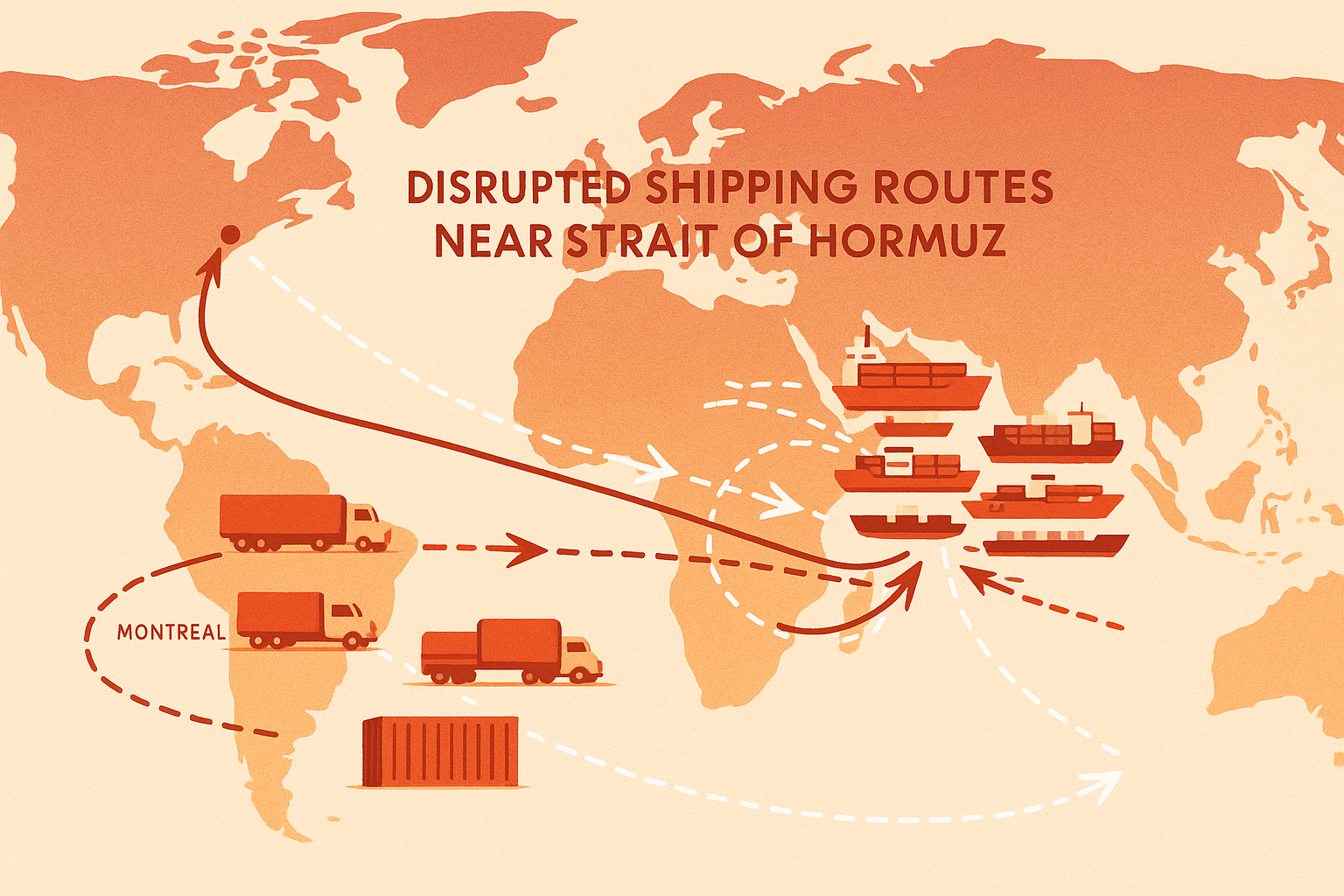
The Strait of Hormuz crisis has caused shipping traffic to drop by 90%, making it very hard for ships to get through and sending oil prices soaring. Many big shipping companies have stopped going to Gulf ports, leading to shortages of fuel and fertilizer around the world. This has forced new trade routes and made shipping much more expensive and unpredictable. Ports in North America and Asia are getting busier as companies look for safer and faster ways to move goods. Trucking across borders is doing better, but global shipping is still facing big challenges and changes.
What is the impact of the Strait of Hormuz crisis on global freight and shipping?
The Strait of Hormuz crisis has caused a 90% drop in vessel traffic, surged oil prices to ~$100/barrel, led major carriers to suspend Gulf services, caused fuel and fertilizer shortages, and forced global supply chains to shift routes and ports, resulting in higher freight costs and persistent market volatility. Learn more about The comprehensive impact of the Strait of Hormuz crisis on global freight, shipping, and supply chains, including disruptions to maritime routes, oil and fertilizer markets, and strategic adaptations in logistics and trade.
The global freight industry faces unprecedented turbulence as disruptions in the Strait of Hormuz reshape maritime logistics, force carriers to adapt strategies, and redirect trade flows across multiple continents. Recent events have triggered a cascade of operational challenges, from force majeure declarations to infrastructure shifts, fundamentally altering how goods move between continents.
Maritime Crisis Reaches Critical Point
Vessel traffic through the Strait of Hormuz has plummeted approximately 90% following escalating tensions that began in late February 2026. The strait, which typically handles roughly 20-25% of global seaborne oil trade, has become a chokepoint for international commerce, with over 1,000 vessels backlogged in the Persian Gulf and Gulf of Oman. Multiple vessels came under fire as recently as April 23, 2026, with two reportedly seized, creating conditions that have deterred major carriers from maintaining normal operations despite any temporary truces.
The disruption extends far beyond oil tankers. Container ships, dry bulk carriers, and chemical tankers have all faced severe limitations, forcing shipping lines including Maersk, MSC, CMA CGM, COSCO, and Evergreen to suspend Gulf services entirely. These carriers have invoked force majeure clauses - legal provisions allowing them to halt deliveries due to extraordinary circumstances - fundamentally altering contractual obligations with shippers worldwide.
Vessel traffic dropped from approximately 138 ships per day to near-zero levels by mid-March 2026, affecting every major shipping segment.
MSC took particularly aggressive action by declaring an "End of Voyage" for all shipments destined for Arabian Gulf ports on March 3, 2026, imposing a mandatory $800 per container surcharge. Hapag-Lloyd suspended all vessel transits through the strait indefinitely and implemented booking stops for UAE, Iraq, Kuwait, Qatar, Bahrain, Sohar, Dammam/Jubail, and Yemen.
Fuel Costs and Energy Market Disruption
The strait crisis has sent shockwaves through global energy markets. Oil prices have surged to approximately $100 per barrel, while U.S. gasoline prices have climbed close to $4 per gallon. The International Energy Agency reported a record drop in global oil demand of 10.1 million barrels per day, yet supply constraints continue to drive prices upward.
Jet fuel shortages have emerged as a particularly sobering concern, with IATA's Director General warning of critical implications for European air cargo capacity. These shortages stem from constrained supply lines that traditionally relied on Middle Eastern refineries and distribution networks. Regional carriers like Solomon Airlines have responded by imposing fuel surcharges, including an AU$10 domestic levy, following price hikes exceeding 70%.
The ripple effects extend to agricultural markets. Approximately one-third of global fertilizer trade - including two-thirds of urea used for wheat and corn production - typically transits the strait. New Orleans urea prices jumped 32% in a single week during March 2026, indirectly raising costs for agribusiness transport and fuel consumption.
| Impact Category | Specific Effect | Magnitude |
|---|---|---|
| Vessel Traffic | Traffic reduction through Strait | 90% decline |
| Oil Prices | Global crude oil surge | ~$100/barrel |
| Fuel Surcharges | Carrier-imposed levies | AU$10+ domestic |
| Fertilizer Costs | Urea price spike (New Orleans) | 32% weekly increase |
| Vessel Backlog | Ships awaiting transit | 1,000+ vessels |
Strategic Port Shifts and Ocean Diversions
Shipping lines remain cautious even following temporary truces, prioritizing the extraction of trapped tonnage over resuming normal schedules. This strategy sustains delays, supports elevated freight rates, and perpetuates diversions away from Hormuz-affected routes. East Coast and Gulf Coast U.S. ports have gained container volume as shippers seek alternative gateways, while Asian trade routes undergo significant reconfiguration.
The Port of Montreal broke ground on a new container terminal expected to boost capacity by 60%, positioning the facility to handle increased Asian trade diversification. This infrastructure investment reflects broader industry recognition that Middle Eastern volatility may persist, requiring permanent capacity adjustments in alternative markets.
Air cargo hubs have also experienced dramatic shifts. Hong Kong retains its position as a top global hub, while Anchorage Airport has seen traffic surge 40% since 2019 on strengthened Asia-North America lanes. However, jet fuel supply risks threaten the sustainability of European hub operations, potentially forcing further network reconfigurations.
Tariff Strategies and Customs Developments
A new online tariff refund portal launched the week of April 23, 2026, allowing businesses to claim refunds in phases, with priority given to recent payments. Processing timelines remain extended, creating cash flow challenges for importers managing tariff costs amid supply chain disruptions.
Retailers have increasingly turned to "First Sale" valuation strategies as a customs workaround to lower tariff costs on qualifying imports. This approach allows importers to declare the value of goods based on the first commercial transaction in the supply chain rather than the final sale price, potentially reducing duty payments. However, special interest groups and pending legislation aim to close this loophole, creating uncertainty about the long-term viability of such strategies.
Cross-Border Trucking Gains Ground
While maritime and air cargo face significant headwinds, cross-border trucking has emerged as a relative bright spot. The Gordie Howe International Bridge, which opened in 2025, continues to deliver benefits for Canada-U.S. freight movement. The bridge is projected to save truck drivers nearly 850,000 hours per year in wait times compared to the Ambassador Bridge, translating to lower fuel costs, reduced labor expenses, and decreased carbon emissions.
Modern customs processing and direct freeway-to-freeway connections eliminate urban congestion, enabling faster crossings and stronger competitiveness for North American trade.
Canadian Prime Minister Mark Carney announced on April 20, 2026, a temporary 10-cent-per-liter fuel tax relief measure designed to cut carrier costs and support the trucking sector. This policy intervention, combined with improved infrastructure, has positioned cross-border trucking as an increasingly attractive alternative to ocean and air freight for eligible shipments.
U.S. freight rail recorded its strongest March performance since 2022, with over 230,000 weekly carloads, signaling positive synergies between trucking and rail modes. However, early 2026 data showed truck exports from Mexico to the U.S. fell 54% due to trade volatility, illustrating that land-based freight remains vulnerable to policy uncertainties.
Industry Adaptation and Future Outlook
The convergence of Middle Eastern disruptions, infrastructure developments, and policy shifts has fundamentally reshaped freight market dynamics. Carriers continue to navigate a landscape defined by elevated risks, extended transit times, and unpredictable cost structures. Shipping lines maintain selective transit strategies based on operator risk tolerance, while shippers explore alternative routings, modes, and customs strategies to maintain supply chain continuity.
The 60% capacity expansion at the Port of Montreal, combined with strengthened trucking corridors and evolving air cargo networks, suggests the industry is investing in long-term resilience rather than expecting a rapid return to pre-crisis norms. As freight professionals monitor developments in the Strait of Hormuz and assess the durability of current diversions, the market appears positioned for sustained volatility through the remainder of 2026.