
Systemic Exploitation: Analyzing Labor Abuses in the Canadian Trucking Industry
Canadian trucking faces systemic exploitation of foreign workers through TFW violations, "Driver Inc." models, and LMIA fraud. Reforms are urged.
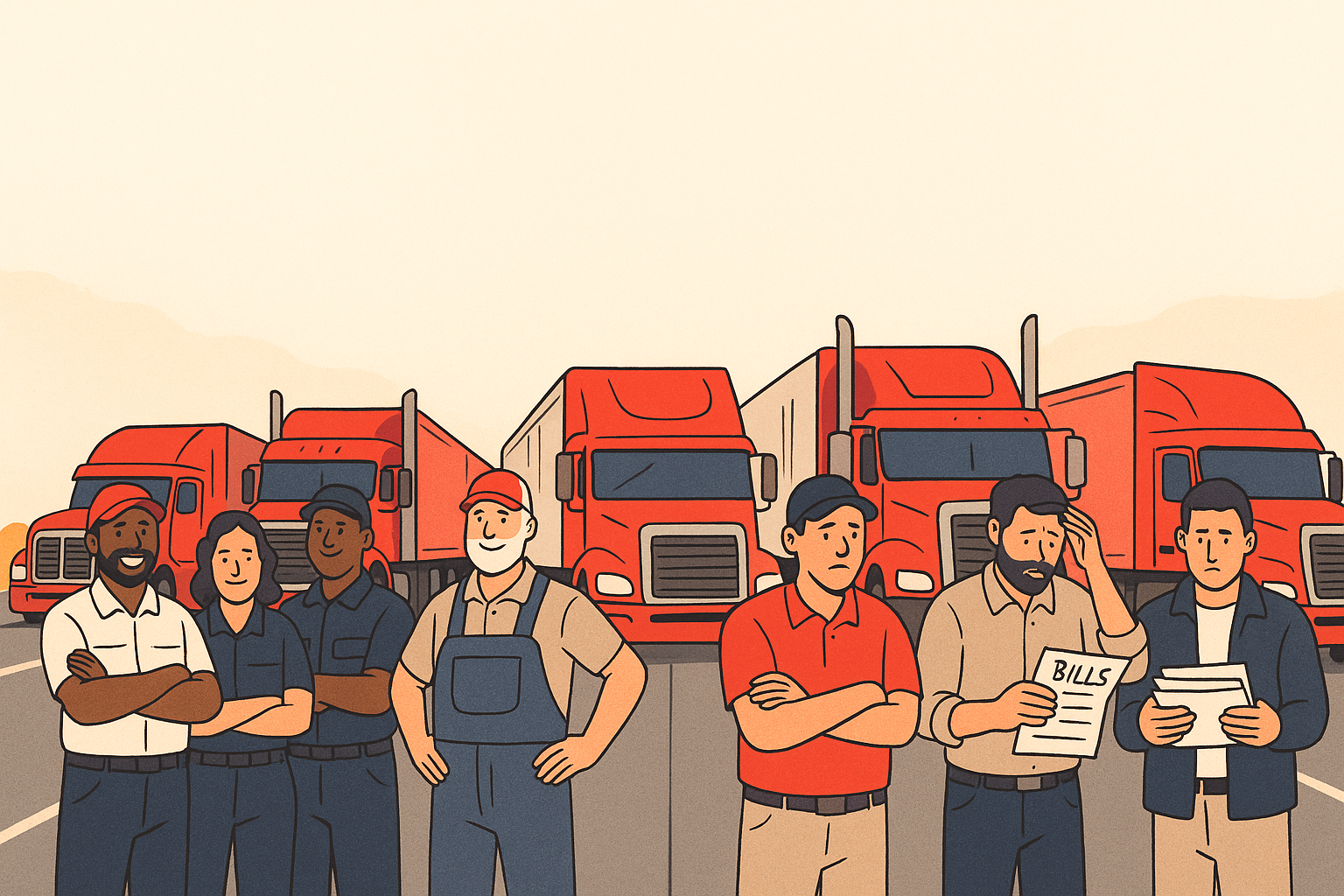
The Canadian trucking industry is plagued by widespread abuse of immigrant and temporary foreign workers. Many drivers face wage theft, unsafe conditions, and are misclassified as independent contractors, losing out on benefits and protections. Fraudulent job offers and expensive cash scams leave workers vulnerable while companies avoid penalties and continue their harmful practices. Even with millions in unpaid fines and growing political pressure, little has changed, and many workers remain stuck in tough, unfair situations. The lack of reform keeps the industry dangerous and difficult for those who rely on these jobs.
What are the main forms of labor abuse in the Canadian trucking industry?
The Canadian trucking industry faces multiple labor abuses, including Temporary Foreign Worker (TFW) program violations, the "Driver Inc." misclassification model, fraudulent Labour Market Impact Assessments (LMIA), and permit-tied employment. These issues lead to wage theft, denied benefits, unsafe conditions, and increased vulnerability for immigrant drivers.
Systemic Abuse of Foreign Workers Exposed
A comprehensive analysis of Government of Canada data has revealed widespread abuse of Canada's Temporary Foreign Worker program within the trucking industry. Between 2020 and 2025, trucking companies accounted for more than 10% of all TFW program violations across Canadian industries, with 83 violations out of 821 total cases recorded during this period.
The situation appears to be accelerating rather than improving. By early 2026, the trucking sector had already recorded 17 violations, matching the entire previous year's total and placing the industry on track to surpass the 30 violations documented in 2023. This troubling trajectory suggests that enforcement measures have yet to effectively curb exploitative practices.
Financial Penalties Remain Unpaid
According to government data, TFW penalties totaled $4.882 million in 2024-2025 across all sectors, with trucking companies representing a significant portion of these violations. Industry reports indicate that a substantial amount of these fines remains unpaid. Companies with outstanding penalties have been deemed ineligible to participate in the program, though this sanction has not prevented the continuation of violations across the sector.
Common infractions include employers failing to maintain required documentation for six years demonstrating they met employment conditions for foreign nationals. Additionally, many companies have been found misrepresenting job descriptions on Labour Market Impact Assessment applications, a practice that undermines the integrity of Canada's immigration system.
The "Driver Inc." Exploitation Model
Beyond TFW program violations, immigrant drivers face exploitation through the "Driver Inc." business model, where companies require drivers to incorporate as independent businesses. This arrangement shifts all financial risks - including taxes, insurance, and vehicle maintenance - onto drivers while carriers save millions in employment costs.
According to industry reports, trucking accounted for a disproportionate share of Canada Labour Code violations despite comprising a relatively small portion of federally regulated employment.
This misclassification denies drivers access to vacation pay, overtime compensation, pensions, Employment Insurance, and fundamental labour protections. The practice disproportionately affects newcomers who lack knowledge of Canadian employment law or sufficient English language skills to challenge these arrangements.
| Exploitation Type | Impact on Workers | Industry Scope |
|---|---|---|
| TFW Program Violations | Documentation failures, misrepresented job terms | Multiple violations documented |
| Driver Inc. Model | Lost benefits, tax burden shift | Significant portion of labour code breaches |
| LMIA Fraud | Fake job promises, cash scams | Substantial upfront fees |
| Permit-Tied Employment | Low wages, fear of speaking out | Foreign and student visa holders |
LMIA Fraud and Cash Consultants
Immigration consultants have been charging substantial amounts in cash for fraudulent Labour Market Impact Assessments, promising jobs that either expire quickly or never materialize. Victims lose their savings without recourse, while some later endure wage theft or must claim abuse to switch to open work permits.
Foreign drivers on temporary work permits or student visas often live in their trucks, receive substandard wages, and fear reporting violations due to their permit dependency on a single employer. Many lack proper training, creating safety risks on Canadian roads while simultaneously depressing wages for domestic drivers.
Insurance Costs Add Pressure
While the trucking insurance market has shown signs of stabilization after years of sharp increases, commercial auto rates remain elevated, particularly in Alberta and for operations with claims history. According to industry reports, well-managed fleets with strong safety records have seen moderate premium decreases in recent renewals, but high-risk operations continue facing significant cost pressures.
Industry data indicates that claims severity and frequency rose sharply in recent years, with substantial increases in claim counts across major provinces.
The combination of rising insurance costs and exploitative labour practices creates a challenging environment for legitimate operators competing against companies that cut costs through worker exploitation. Modern heavy-duty commercial trucks now cost $200,000-$250,000, with advanced technology driving higher repair bills amid supply chain issues and parts inflation.
Calls for Reform
The Canadian Trucking Alliance has labeled Driver Inc. as a top industry threat, presenting concerns to Parliament. MPs have launched a probe into trucking sector labour standards, with the Bloc Québécois specifically calling out widespread violations.
Proposed reforms include amending the Canada Labour Code to establish minimum per-mile rates adjusted for inflation, hourly wages for non-driving tasks, and a three-part test to properly classify employees versus contractors. Advocates also call for extended claim filing times, stronger CRA enforcement against companies that change names to evade penalties, and coordinated inspections with worker empowerment measures.
Recent reports indicate that no major reforms have been implemented, leaving immigrant workers vulnerable to ongoing exploitation despite growing political attention to the issue. The trucking industry, which moves a significant portion of Canadian goods and contributes substantially to the nation's GDP, faces mounting pressure to address these systemic problems that threaten both worker welfare and road safety.