
Rising Diesel Costs Squeeze Trucking: Navigating Mid-2026 Price Spikes and Regional Disparities
Mid-2026 sees diesel at $5.313/gallon, squeezing truckers. West Coast pays most. Independents struggle with costs & delayed payments.
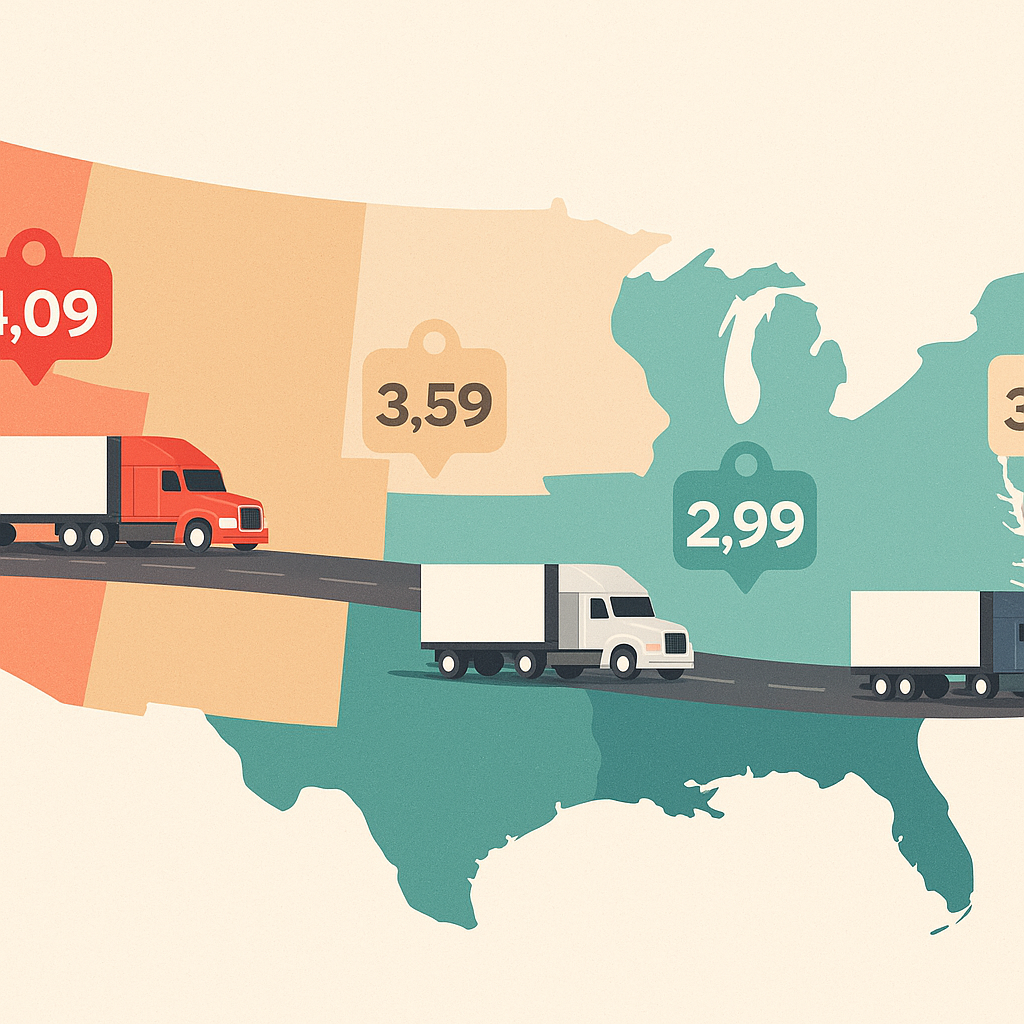
Diesel prices have shown significant volatility throughout 2026, creating challenges for truckers, especially small operators, as fuel costs impact their profit margins. Truckers have had to be more selective about which jobs to take and sometimes adjust their operations accordingly. Shippers also face challenges, trying to find ways to handle the fluctuating costs and keep their goods moving. The whole trucking industry is under pressure, with some small companies shutting down because they just can't keep up.
What is causing the volatility in diesel prices for trucking in 2026 and how does it impact truckers?
Throughout 2026, diesel prices have experienced significant fluctuations, with substantial regional disparities creating operational challenges for trucking companies, especially independents, affecting profit margins, cash flow, and forcing difficult decisions about loads and routes.
Volatile diesel prices are creating significant financial pressure across the trucking industry in 2026, with regional variations adding complexity to operational planning. The fluctuations are hitting independent truckers and shippers particularly hard, forcing both groups to scramble for ways to absorb or offset the mounting costs.
Regional Price Disparities
The diesel market shows dramatic regional variation, with West Coast drivers facing the steepest bills. Based on available data from mid-2026, California diesel prices reached $6.713 per gallon for the week ending June 15, 2026, and $6.468 for the week ending June 22, 2026. The West Coast regional average was $6.074 per gallon for the week ending June 15, 2026, substantially above other regions tracked by federal data. Meanwhile, the Gulf Coast maintained the lowest regional prices at $4.646 on June 15, $4.415 on June 22, and $4.283 on June 29, 2026.
| Region | Price per Gallon (June 15, 2026) |
|---|---|
| California | $6.713 |
| West Coast | $6.074 |
| Gulf Coast | $4.646 |
The spread between California and Gulf Coast prices was substantial - $2.067 per gallon for the week ending June 15, 2026, $2.053 for June 22, and $1.897 for June 29. These regional differences reflect variations in state taxes, refinery capacity, and distribution infrastructure. The significant gap between West Coast and Gulf Coast averages translates to hundreds of dollars in additional costs for long-haul operators running coast-to-coast routes.
The Squeeze on Independent Truckers
For owner-operators and small carriers, diesel price volatility creates immediate cash-flow challenges. Industry reports indicate that significant increases in U.S. diesel prices have been straining the profits of independent truck drivers. The timing problem compounds the pain: truckers pay fuel expenses immediately but often wait 30 days or more to receive payment for transport services.
Fuel represents about 21% of total cost per mile based on industry benchmarking, according to C.H. Robinson's March 2026 market analysis. When diesel jumps significantly per gallon, that cost structure shifts dramatically. Yet independent operators face challenges in fully recovering increased fuel costs through rate negotiations, leaving a significant portion to eat into already thin margins.
The operational responses are telling. Many independents have become more selective about which loads they accept, avoiding low-margin trips and scrutinizing routes for excessive deadhead miles. Some delay maintenance or other discretionary spending to preserve working capital, while others reduce their schedules or stop running temporarily when rates fail to keep pace with pump prices.
Cost Pass-Through Challenges
Shippers face their own dilemma: how to manage fluctuating transportation costs without crippling their supply chains or profit margins. The traditional tool - fuel surcharge clauses tied to diesel price indexes - helps but rarely provides complete insulation. Surcharges typically lag actual price movements and may not cover the full increase, especially in spot markets where rates adjust more rapidly than contract terms.
Fuel surcharges indexed to recognized diesel benchmarks help both carriers and shippers manage volatility, but they work best when negotiated transparently and updated regularly to reflect real market conditions.
Logistics providers are pushing clients toward several mitigation strategies. Shipment consolidation stands out as a quick win, combining smaller loads into fuller trucks to reduce trip counts and improve fuel efficiency per unit delivered. Route optimization software helps eliminate unnecessary miles and avoid congestion hot spots. Mode shifting - moving freight from expedited truck to intermodal rail or full truckload where service windows allow - can cut fuel intensity significantly on longer corridors.
Longer-term approaches require more investment. Some shippers are repositioning inventory closer to end markets to reduce average haul lengths. Others are renegotiating transportation contracts to lock in rates with clearly defined fuel adjustment mechanisms, trading some upside flexibility for protection against further spikes. A few are exploring nearshoring or regional distribution center strategies to fundamentally reduce their exposure to over-the-road fuel costs.
Market Dynamics and Outlook
The current price environment reflects multiple pressures. Throughout 2026, prices have shown considerable volatility, with industry analysts tracking significant fluctuations in pump prices across different regions and time periods. The U.S. average diesel price was $5.059 for the week ending June 15, 2026, and reached $5.60 in May 2026, demonstrating the ongoing price instability affecting the industry.
The trucking sector entered this fuel-price volatility already weakened by a multi-year freight recession. Demand has remained sluggish even as costs fluctuate, leaving carriers with limited pricing power. Smaller operators face the harshest conditions because they lack the negotiating leverage of large fleets and often cannot absorb sudden cost increases through diversified revenue streams or fuel hedging programs.
The combination of volatile diesel prices and stagnant freight demand is accelerating capacity exits, with marginal carriers shutting down and industry consolidation likely to continue through the remainder of 2026.
For both truckers and shippers, the path forward requires balancing short-term survival tactics with longer-term structural adjustments. Truckers are pushing for better contract terms and more transparent fuel recovery mechanisms. Shippers are investing in logistics technology, rethinking network design, and building stronger carrier partnerships to secure capacity without paying panic premiums. The diesel market's trajectory over the coming months will determine whether these adaptations prove sufficient or whether the industry faces another wave of disruption and consolidation.