
Homeland Security's Expanded Role Reshapes Trucking Enforcement Landscape
Homeland Security's expanded role reshapes trucking enforcement, impacting driver qualifications, training, and industry capacity.
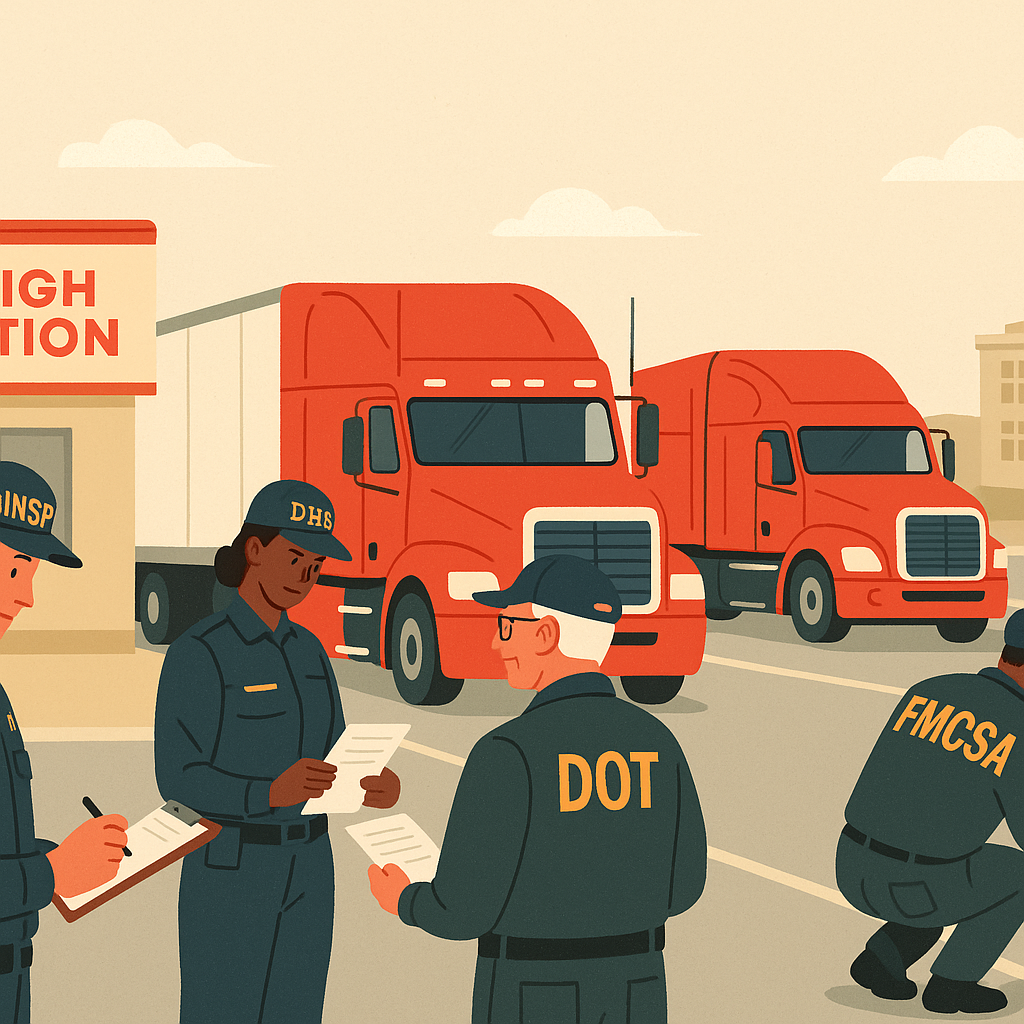
Homeland Security is now working closely with other agencies to check trucks and drivers on US highways. They are making sure drivers have the right papers, speak English well, and went to good training schools. Many drivers and schools that don't follow the rules are being removed. This is making it harder to become a truck driver, and there are fewer training schools to choose from now. All these changes aim to make roads safer, but some worry it could make it harder to find enough truck drivers.
How is Homeland Security's expanded role changing trucking enforcement in the United States?
Homeland Security's expanded role in trucking enforcement now includes joint roadside inspections with FMCSA and ICE, stricter checks on driver credentials and work authorization, removal of unqualified training schools, and tougher CDL standards. This shift aims to increase safety but also tightens driver qualification and reduces available CDL training options.
The Trump administration has launched a sweeping expansion of federal trucking enforcement that places the Department of Homeland Security in a central role alongside traditional transportation regulators. Through Operation Highway Shield, inspectors from the Federal Motor Carrier Safety Administration (FMCSA), Immigration and Customs Enforcement (ICE), and Homeland Security Investigations (HSI) now conduct joint roadside checks targeting unsafe vehicles and unqualified drivers.
This multi-agency approach represents a fundamental shift in how federal authorities oversee the commercial trucking industry. DHS agents are now working alongside state troopers at weigh stations across the country, checking not just vehicle safety but also driver credentials, work authorization, and English-language proficiency. According to Transportation Secretary Sean Duffy, the department has removed a significant number of drivers from the roads for failing to meet English proficiency requirements and forced states to cancel many licenses that were improperly issued.
Homeland Security's Expanded Enforcement Role
The partnership between the Department of Transportation and DHS extends beyond roadside inspections. HSI agents are now participating in investigations of CDL training schools suspected of fraud. The FMCSA identified a significant number of entry-level training schools with suspected violations, and USDOT announced it would engage HSI in these investigations.
The department has issued notices of proposed removal to many CDL training schools from the national Training Provider Registry. These schools were found to have serious compliance failures, including unqualified instructors, fake addresses, improper training vehicles, incomplete student assessments, and failure to meet state licensing requirements. The removal of these providers from the registry means they can no longer serve as valid training sources for federally mandated Entry-Level Driver Training.
"Every life lost from an illegal trucker behind the wheel of a big rig is a completely preventable tragedy - and this administration will not stand for it," said Transportation Secretary Sean Duffy.
Impact on Driver Qualification Standards
The enforcement crackdown has tightened requirements for who can obtain and maintain a commercial driver's license. Non-citizens seeking a CDL or renewal must now demonstrate lawful presence and specific employment authorization, with acceptable visa categories primarily limited to H-2A, H-2B, and E-2 classifications. Many existing non-domiciled CDL holders may no longer qualify under the stricter standards.
DHS Secretary Markwayne Mullin stated that the joint enforcement effort has removed many dangerous truckers from the roadways. FMCSA Administrator Derek Barrs emphasized the safety focus: "This is about saving lives."
Training School Compliance and Registry Changes
The mass removal of training providers from the FMCSA registry has created significant operational challenges. Secretary Duffy reported that the department had purged a significant number of unqualified training schools from the FMCSA registry as part of the ongoing effort to root out fraudulent operators.
Schools remaining on the Training Provider Registry face heightened documentation requirements. Providers must maintain detailed records of behind-the-wheel training hours, instructor qualifications, student attendance, and completion assessments. Any training provider found in violation of safety standards or caught submitting false information risks immediate removal from the registry.
Industry Response and Capacity Concerns
Industry analysts have expressed concern about the enforcement campaign's effect on trucking capacity. According to industry reports, the intensified enforcement is functioning as a capacity constraint on the transportation sector, with expectations of elevated compliance costs and a constrained driver pool.
Logistics firms report that the regulatory pressure is already affecting inland transportation. ITS Logistics noted significant supply-side regulatory enforcement and trucking capacity reductions impacting the market. The reduction in available training schools has forced many CDL applicants to find alternate providers, creating longer wait times and fewer options in some regions.
The enforcement push has become a major supply-side narrative in trucking, though market analysts note that anticipated spot rate increases have not fully materialized due to lower freight demand.
Operational Changes at Weigh Stations
The most visible change for drivers has been the presence of federal immigration agents at state weigh stations. ICE and HSI personnel now work directly with state troopers during commercial vehicle inspections, checking whether drivers have proper work authorization and valid credentials. This represents a significant departure from traditional weigh station operations, which historically focused on vehicle weight limits and basic safety compliance.
FreightWaves reported that DHS is actively working weigh stations with state troopers to identify drivers operating with improperly issued CDLs. The joint operations also verify English-language proficiency and investigate suspected cases of document fraud.
Ongoing Investigations and Future Enforcement
The administration has indicated that enforcement efforts will continue as part of its ongoing campaign to eliminate unsafe operators from the commercial trucking sector. The department is also pressuring states it views as noncompliant with federal standards, threatening funding actions and decertification measures.
Carriers now face a more complex compliance environment that requires careful vetting of driver credentials, training documentation, and work authorization. The expanded role of Homeland Security in what was traditionally transportation-focused enforcement represents a new operational reality for the trucking industry, with implications for hiring practices, training pipelines, and overall fleet capacity.