
Operation Highway Shield: Enhancing Commercial Transport Security and Compliance
Operation Highway Shield removed 800+ unsafe truck drivers, seizing $1M in stolen cargo. New rules target foreign CDLs.
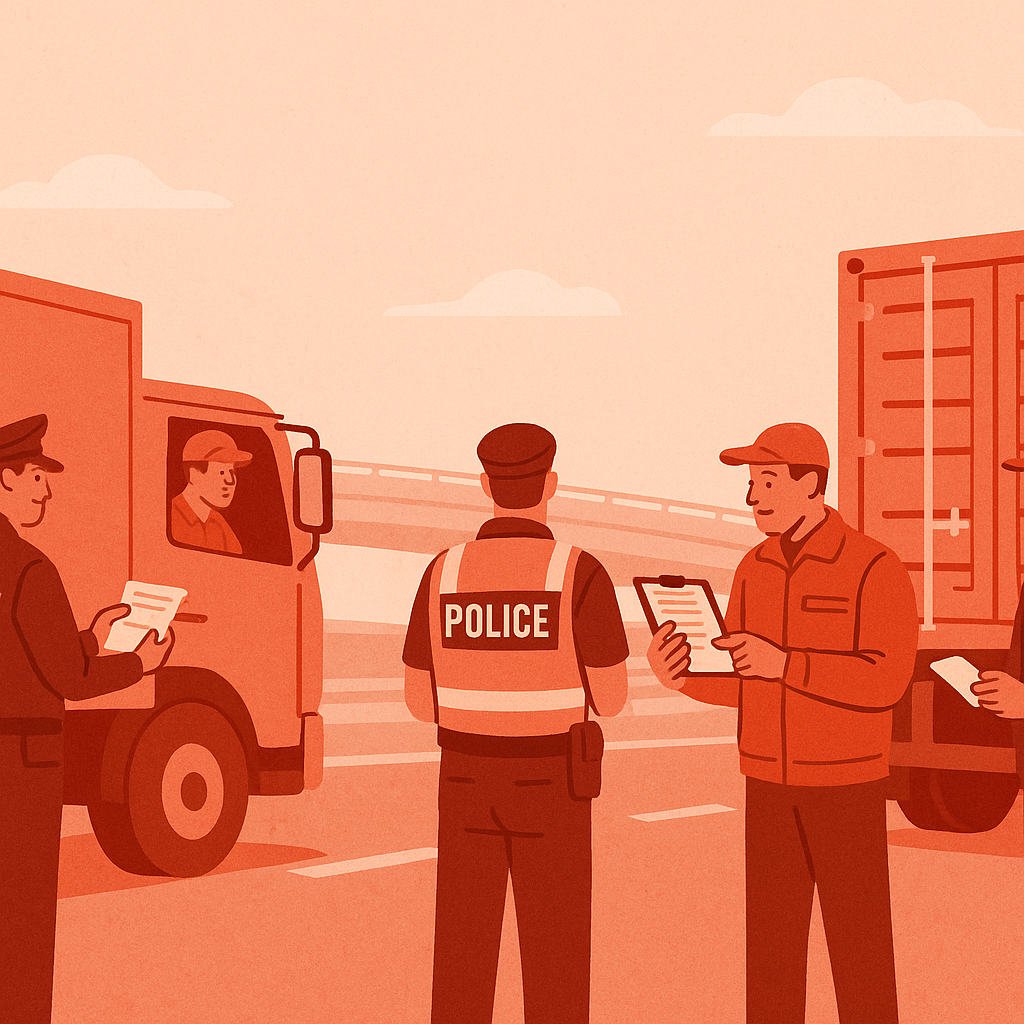
Operation Highway Shield's second wave made highways safer by removing over 800 unsafe truck drivers across four states. According to industry reports, officers conducted significant enforcement operations, made numerous criminal arrests, and recovered substantial amounts in stolen cargo. The operation also found drivers who couldn't speak enough English and caught people breaking immigration rules. New laws make it harder for foreign drivers to get commercial licenses, so now only certain visa holders can get one. This big crackdown means fewer trucks on the road for a while, but it's meant to make everyone safer.
What were the key outcomes of Operation Highway Shield's second wave?
Operation Highway Shield's second wave removed over 800 unqualified truck drivers from highways across Illinois, Indiana, Iowa, and Ohio. Authorities conducted 3,487 stops, placing 766 drivers and vehicles out of service, making 51 immigration detentions, 86 criminal arrests, and recovering nearly $1 million in stolen cargo.
DHS and DOT announced preliminary results from a coordinated enforcement action under Operation Highway Shield, stating that more than 800 unqualified truck drivers were removed from U.S. roads.[1] The operation targeted unsafe commercial vehicle operators through roadside inspections and compliance checks across multiple states.
Enforcement Results and Scope
The multi-day operation involved ICE Homeland Security Investigations, the Federal Motor Carrier Safety Administration, and state highway patrols conducting 3,487 enforcement stops. According to the joint announcement, enforcement teams placed 766 unsafe drivers and vehicles out of service, representing a significant intervention in commercial trucking safety compliance.
The operation yielded 51 immigration detentions, including 21 drivers operating with non-domiciled commercial driver's licenses issued by California and New York. Enforcement teams also documented 36 violations for failing English Language Proficiency tests, a requirement under federal commercial driving regulations. Additionally, 86 operators faced arrest for various offenses including road rage incidents and domestic violence charges.
Law enforcement recovered nearly $1 million in stolen cargo during the operation, highlighting the intersection of transportation security and criminal activity on U.S. freight corridors.
Regulatory Framework Changes
The enforcement action occurred amid significant regulatory changes affecting foreign commercial drivers. A final rule from FMCSA, effective March 16, 2026, sharply restricted eligibility for non-domiciled commercial driver's licenses and commercial learner's permits. Under the new regulations, only foreign-domiciled individuals holding H-2A, H-2B, or E-2 nonimmigrant status can obtain these credentials.
The rule eliminates previous pathways for other categories of foreign drivers and requires states to verify immigration status through the SAVE system. Employment authorization documents alone no longer satisfy eligibility requirements for non-domiciled commercial driving credentials. States must now conduct enhanced vetting and document-based checks, with credential validity tied directly to the applicant's authorized stay period.
| Violation Category | Number of Cases |
|---|---|
| Unsafe drivers/vehicles out of service | 766 |
| Immigration detentions | 51 |
| Criminal arrests | 86 |
| English proficiency violations | 36 |
| Non-domiciled CDL cases | 21 |
Historical Context of DHS Enforcement
The Department of Homeland Security has maintained transportation security responsibilities since its creation in 2003, when the Homeland Security Act of 2002 consolidated 22 agencies and components into a unified department. While the Department of Transportation retained primary authority over motor carrier and roadway transportation policy, DHS assumed border and security-related enforcement missions, including the transfer of the Transportation Security Administration from DOT to DHS.
This division of labor between the two departments established the framework for joint operations like Highway Shield, where transportation safety compliance intersects with immigration enforcement and national security concerns.
First Wave Comparison
The second wave follows an earlier operation conducted in Florida from March 23 to March 26, 2026. That initial effort involved more than 3,300 commercial vehicle inspections, resulting in 176 drivers placed out of service. The Florida operation documented 54 language deficiency violations, 35 criminal arrests, and 42 immigration-related custody actions.
The expansion from a single-state operation to a four-state regional effort in the second wave demonstrates an escalation in enforcement scope and coordination among federal and state agencies.
Industry Impact and Capacity Concerns
Industry analysts have noted that enforcement actions removing drivers from service can create immediate effects on trucking capacity, particularly in regional lanes and spot markets. The removal of more than 800 drivers within a short period represents a substantial reduction in available commercial driving capacity across the affected corridors.
Market observers suggest that licensing crackdowns and compliance enforcement may contribute to capacity tightening as demand fluctuates, though effects appear concentrated in specific geographic pockets rather than distributed uniformly across the national trucking network.
DHS Secretary Markwayne Mullin characterized the operation as targeting "unvetted drivers" and licensing abuses, framing the enforcement action as essential to highway safety.
The operation's focus on English language proficiency reflects federal requirements that commercial drivers demonstrate adequate English skills to communicate with enforcement officers and understand traffic signs and signals. The 36 documented violations in this category suggest ongoing compliance challenges in this area of commercial driver qualification.
Compliance and Documentation Standards
Federal regulations require commercial drivers to maintain valid credentials that correspond with their immigration status and authorized period of stay. The 21 cases involving non-domiciled CDLs from California and New York indicate potential systemic issues with state-level issuance practices that the new federal rule aims to address through mandatory SAVE system checks and enhanced documentation requirements.
The enforcement data reveals multiple compliance failure points: immigration status, English proficiency, vehicle safety standards, and criminal background issues. This multi-faceted approach to commercial vehicle enforcement reflects the complex regulatory environment governing commercial trucking operations.
The recovery of nearly $1 million in stolen cargo during routine enforcement stops underscores the broader security implications of commercial vehicle compliance checks beyond driver qualification issues.
As federal agencies continue coordinated enforcement efforts, the trucking industry faces heightened scrutiny of driver qualifications and vehicle safety compliance. The preliminary results from Operation Highway Shield's second wave signal an intensified regulatory environment for commercial motor carriers operating across state lines and freight corridors.