
The National Truck Parking Crisis: A Systemic Challenge to Safety, Compliance, and Supply Chain Efficiency
The US truck parking crisis: 3.5M drivers, 313K spaces. Shortage impacts safety, compliance, and supply chain efficiency.
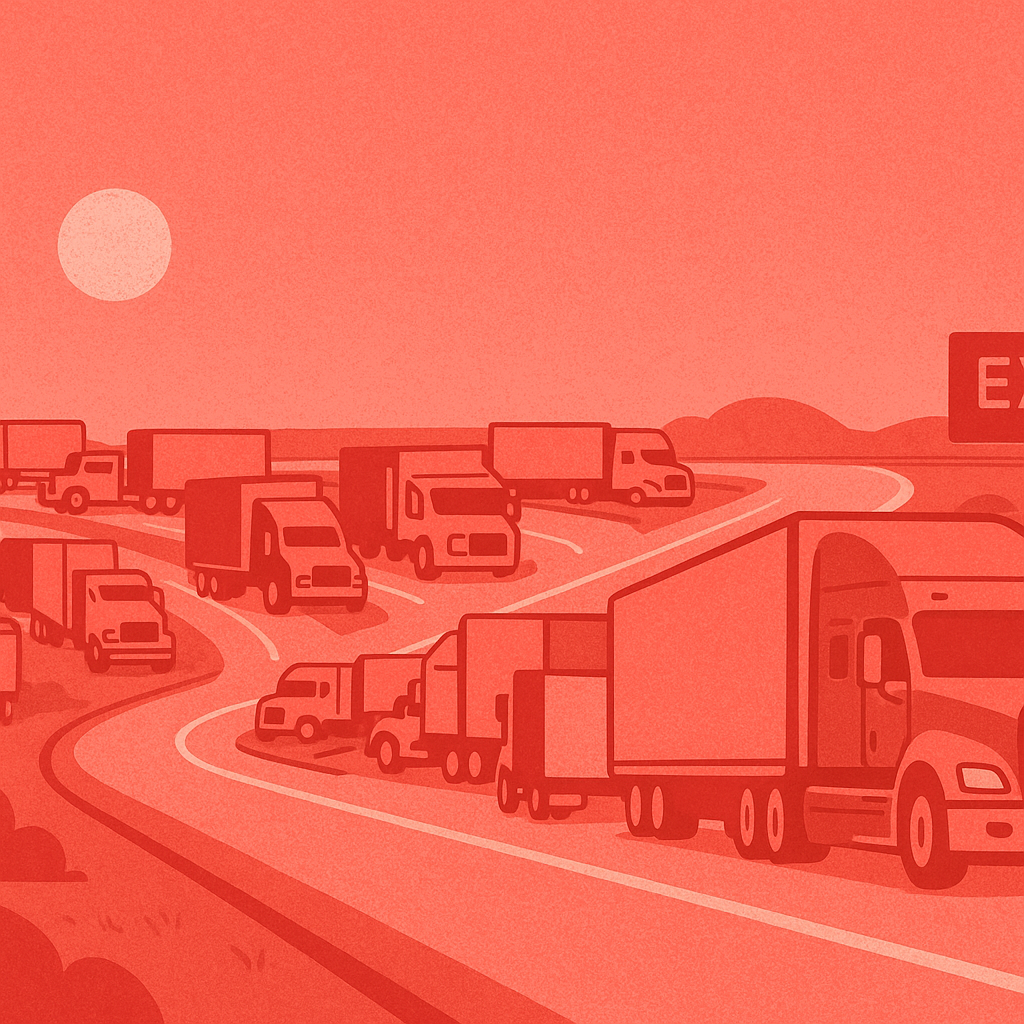
The national truck parking crisis means there are not enough safe places for truck drivers to park and rest. Industry reports indicate a significant shortage of parking spots, so many drivers can't find a legal space when they need it. This leads to drivers parking in dangerous or illegal spots, which can cause accidents and safety issues. Drivers also waste nearly an hour each day just searching for parking, costing time and money. The government is trying to help, but much more needs to be done to keep roads safe and supply chains running smoothly.
What is the national truck parking crisis and why is it a major problem?
The national truck parking crisis refers to the severe shortage of safe, legal parking spaces for commercial truck drivers in the U.S., with industry reports indicating a significant shortage relative to driver demand. This shortage threatens highway safety, complicates regulatory compliance, and disrupts supply chain efficiency nationwide.
The National Truck Parking Crisis: A Growing Safety and Compliance Challenge
Across the United States, commercial truck drivers face a persistent and dangerous problem: finding a safe, legal place to park. With millions of truck drivers on the road and a significant shortage of marked parking spaces nationwide, the math is stark. Recent industry analysis shows there is a substantial gap between available truck parking spaces and driver demand, creating a nationwide shortage that forces drivers into impossible choices between safety, compliance, and completing their routes.
The Scale of the Problem
The truck parking shortage is not a minor inconvenience. Industry reports indicate a substantial shortfall in available spaces, with some analyses suggesting the practical gap is far larger than official estimates. When comparing nightly demand to usable parking supply, the deficit may be significant. According to industry research, the vast majority of drivers regularly experience problems finding safe parking.
| Parking Shortage Metrics | Status |
|---|---|
| Total truck drivers on the road daily | Millions |
| Parking space shortage | Significant nationwide deficit |
| Drivers regularly facing parking problems | Vast majority |
| Average daily time spent searching for parking | 56 minutes |
This shortage translates directly into unsafe conditions. A significant portion of drivers admit to breaking parking laws to find a safe place to stop. Many drivers report parking in unauthorized locations simply because no legal parking was available when they needed rest. These violations typically occur on highway shoulders, exit ramps, and other dangerous locations where stopped trucks create hazards for all road users.
The Compliance Dilemma
The truck parking crisis creates an impossible situation: drivers must comply with federal hours-of-service regulations that mandate rest breaks, yet the infrastructure to support legal compliance simply does not exist in adequate supply.
When drivers cannot find legal parking as their hours-of-service limits approach, they face a no-win scenario. Continuing to drive past regulatory limits risks violations and fines. Stopping in unauthorized locations risks citations, accidents, and personal safety. The pressure to keep freight moving on schedule compounds these choices, pushing tired drivers to make decisions that compromise safety.
The regulatory framework recognizes this tension. The Federal Highway Administration has designated addressing the shortage of long-term parking for commercial motor vehicles on the National Highway System as a national priority under Jason's Law. Meanwhile, recent Department of Transportation guidance now requires states receiving National Highway Freight Program funds to include comprehensive truck parking assessments in their State Freight Plans. States that fail to update their plans risk losing access to federal highway funding.
Economic and Safety Costs
The parking shortage imposes substantial costs on the trucking industry and the broader economy. Drivers spend an average of 56 minutes per day searching for parking, time that reduces available driving hours and adds unpaid labor to already demanding schedules. This search time contributes to missed delivery windows, extra fuel consumption, and operational inefficiencies that ripple through supply chains.
Industry analyses estimate the annual cost of the parking shortage is substantial when accounting for lost productivity, safety incidents, and regulatory compliance issues. Beyond economics, the safety implications are profound. Fatigued drivers who cannot find rest stops may push beyond safe limits. Trucks parked on shoulders and ramps create collision risks. The shortage transforms a logistics problem into a public safety crisis affecting everyone who shares the highway system.
Current Solutions and Federal Response
Recognizing the severity of the crisis, federal and state governments have begun targeted responses. Congress approved $200 million for truck parking projects in the fiscal 2026 funding package, directing resources to expand parking along freight and commuter corridors. The Truck Parking Safety Improvement Act would establish a competitive grant program for commercial motor vehicle parking and authorizes $151 million annually for FY2025-FY2029.
At the state level, progress is uneven. States like Pennsylvania and Ohio have announced plans to add significant numbers of new spaces at multiple sites statewide. These efforts represent meaningful progress, yet they address only a fraction of the national shortfall.
Technology and information systems offer another avenue for improvement. Real-time parking information systems can direct drivers to available spaces, making better use of existing capacity without requiring new construction.
Several states have deployed truck parking information management systems that communicate space availability to drivers in real time. Maryland and Washington have implemented systems along major freight corridors, helping drivers locate parking before they reach critical hours-of-service limits. These technological solutions complement physical expansion by revealing and utilizing capacity that drivers might otherwise miss.
Public-private partnerships represent another strategy. Most truck parking is provided by the private sector, and expanding this capacity through partnerships can add spaces more quickly than government construction alone. Regional planners are also examining zoning changes to allow designated long-term truck parking and staging areas, making more land legally usable for parking without requiring public funding for construction.
The Path Forward
The American Transportation Research Institute has focused recent research on expanding parking at public rest areas, including strategies for repurposing state-owned facilities and creating severe-weather parking capacity. The federal Truck Parking Coalition continues working to identify needs, share data, and encourage stakeholder partnerships to support implementation of new parking capacity.
Yet the fundamental challenge remains: demand far exceeds supply, and closing the gap requires sustained investment, policy coordination, and creative use of existing resources. Until the infrastructure catches up to the reality of modern freight transportation, drivers will continue facing the daily dilemma of choosing between regulatory compliance, personal safety, and operational demands. The parking shortage is not merely a driver inconvenience. It is a systemic failure that compromises highway safety, supply chain efficiency, and the working conditions of millions of professional drivers who keep goods moving across the nation.