
Cross-Border Crisis: Visa & Cabotage Enforcement Reshapes US-Mexico Freight Landscape
US-Mexico freight faces disruption as visa enforcement & cabotage crackdown reduce driver capacity. Expect higher rates & delays through 2027.
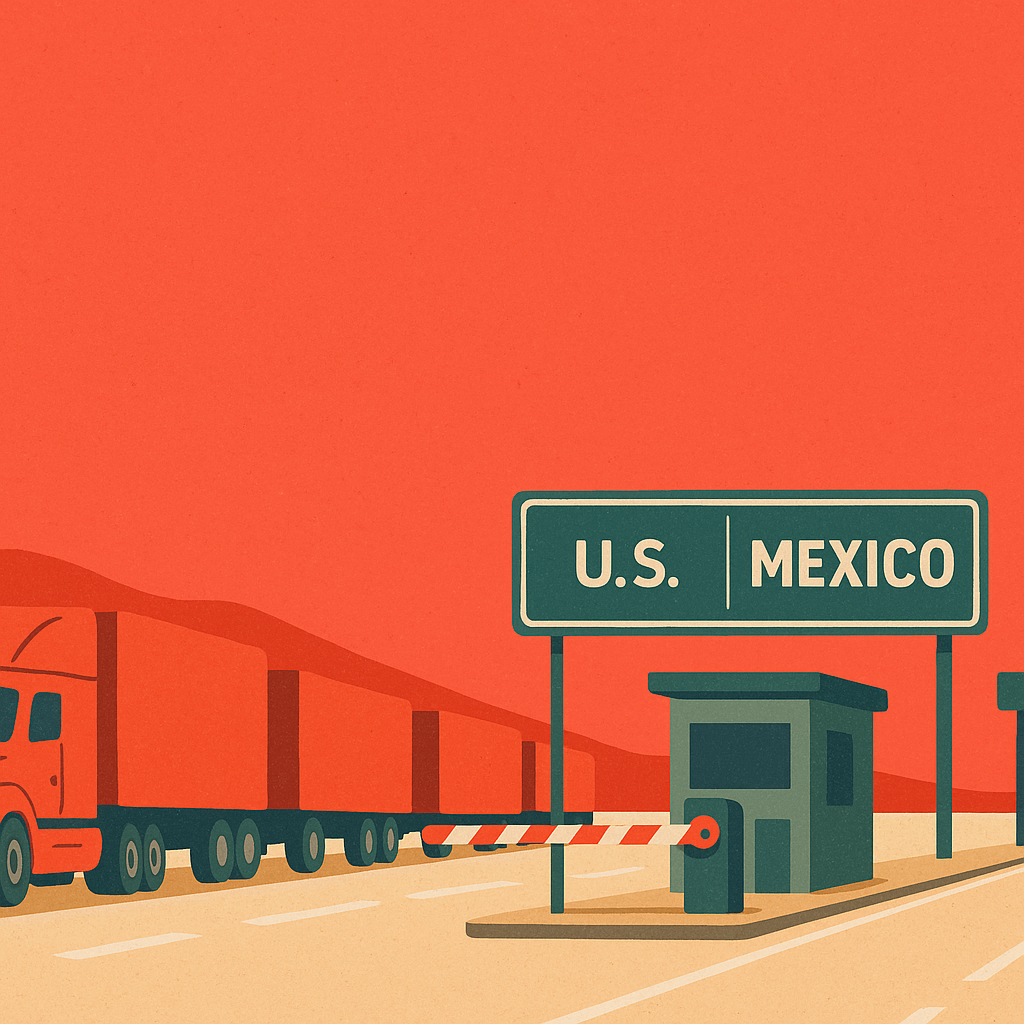
Strict new rules on visas and cabotage are pushing a significant number of foreign truck drivers - mostly from Mexico - out of US freight work. This substantial loss means shipping costs are going up, trucks take longer, and delays are happening at border crossings. Fewer drivers and stricter rules are causing headaches for shippers, with more missed deliveries and higher prices. The border freight world is changing fast, and everyone has to get used to paying more and waiting longer.
How is visa and cabotage enforcement reshaping US-Mexico cross-border freight?
Stricter visa and cabotage enforcement is removing a substantial number of foreign truck drivers from US operations. This capacity loss is causing higher freight rates, longer lead times, reduced service reliability, and operational disruptions at major Southern-border gateways.
The cross-border freight landscape between Mexico and the United States is undergoing a dramatic transformation driven by aggressive visa enforcement and cabotage compliance actions. According to industry reports, a significant number of Mexican truck drivers have lost their U.S. work visas, representing one of the most significant labor disruptions to hit the cross-border trucking industry in years, and carriers moving Southern-border freight should brace for continued operational challenges and upward pricing pressure.
The Scale of Driver Displacement
The numbers paint a stark picture of capacity loss. According to CANACAR, Mexico's largest trucking association, Mexican drivers account for a substantial portion of the foreign drivers pulled from U.S. roads. Industry reports indicate that active Mexican-domiciled trucking companies operating in southern border commercial zones have declined significantly in recent months.
The available sources indicate visa revocations tied to cabotage enforcement, though they do not show a State Department pause on new H-2B, E-2, or EB-3 visa processing. While drivers holding currently valid visas were not immediately affected, enforcement actions have created constraints on cross-border driver availability.
Cabotage Crackdown Reshapes Border Operations
Parallel to visa revocations, U.S. Customs and Border Protection has escalated enforcement of cabotage rules, which prohibit foreign drivers from hauling freight between two points inside the United States. Industry reports indicate that CTPAT members violating cabotage regulations face potential suspension or removal from the trusted-trader program.
"The visa cancellations represent one of the most significant labor disruptions to hit the cross-border trucking industry in years."
This enforcement shift is forcing operational changes across the border corridor. Freight that previously moved through with foreign drivers is increasingly being rerouted into drayage and transload operations at crossing points, creating bottlenecks at major gateways like Laredo, Otay Mesa, and Nogales. Industry sources report that tender acceptance rates for Mexican freight have declined significantly, signaling widespread capacity constraints.
Market Impact and Repricing Dynamics
The capacity squeeze is already translating into financial pressure. CANACAR officials stated that "the cost of freight in the United States has been starting to have an upward effect," though the association has not yet released quantified economic impact figures. Industry reports indicate that Laredo is experiencing tighter availability due to seasonal weather impacts, heightened enforcement of B1 visa rules, and broader network imbalances, contributing to localized rate pressure and longer lead-time requirements.
| Metric | Impact |
|---|---|
| Mexican Driver Visas | Significant revocations reported |
| Foreign Drivers Removed | Substantial numbers affected |
| Mexican Border-Zone Carriers | Notable decline reported |
| Tender Acceptance Rate (Mexican Freight) | Significant decrease |
For carriers, the math is straightforward: when capacity leaves the market and demand remains constant or increases, rates rise. According to industry reports, carriers are being advised to bid more aggressively in border-adjacent lanes, anticipating continued rate pressure.
Compound Labor Constraints
The visa and cabotage enforcement actions compound existing structural labor challenges. CANACAR estimates Mexico faces a shortage of approximately 96,000 truck drivers domestically, meaning the driver pool was already tight before enforcement actions removed many more from cross-border service. Meanwhile, the March 16, 2026 final rule limits non-domiciled CDL eligibility to H-2A, H-2B, and E-2 status holders; it excludes DACA recipients, asylum seekers, refugees, and other non-eligible categories from new or renewed non-domiciled CDLs.
Industry reporting indicates that a significant number of Mexican truck drivers have been removed from the market through non-domiciled CDL crackdowns and English-proficiency enforcement. Industry reports indicate growing unfilled driver positions, with industry executives citing B-1 visa drivers shifting to U.S. cross-border carriers as a key factor driving shortages and wage inflation.
Operational Consequences for Shippers
Shippers dependent on Southern-border lanes face a new operational reality characterized by longer lead times, reduced service reliability, and higher costs. The most immediate effects include missed appointments, extended yard time, detention charges, trailer repositioning expenses, and emergency replacement searches when scheduled carriers cannot cover committed freight.
"These dynamics are contributing to localized rate pressure and longer lead-time requirements."
Cross-border capacity is increasingly concentrated at major gateways, where even modest labor losses create disproportionate delays. Carriers are shifting from through-haul service models to border transfer arrangements, adding handoff complexity and empty-mile costs. The result is a more fragmented, less efficient supply chain that requires greater planning lead time and contingency capacity.
Outlook Through 2027
Looking ahead, industry reports suggest continued tightness in cross-border driver availability. Enforcement of existing rules shows no signs of relaxation, and seasonal border disruptions will continue to compound policy-driven capacity squeezes during peak periods.
Carriers operating through Laredo, El Paso, and Nogales should expect persistent tender rejection rates, elevated spot-market volatility, and labor cost inflation as qualified cross-border drivers command wage premiums. Shippers will need to adjust procurement strategies, building in longer lead times, maintaining larger carrier panels, and accepting higher baseline rates as the new normal for Southern-border freight.
Industry reports indicate that while many domestic lanes remain competitive, cross-border corridors are emerging as a notable exception. For any operation moving freight across the Mexican border, the policy-driven capacity contraction is creating a fundamentally different market - one where disruption and repricing pressure are the baseline expectations rather than occasional exceptions.