
Jones Act Waiver Tightens: From Blanket Relief to Granular Oversight
Trump administration tightens Jones Act waiver, shifting from blanket relief to voyage-by-voyage approval for key commodities.
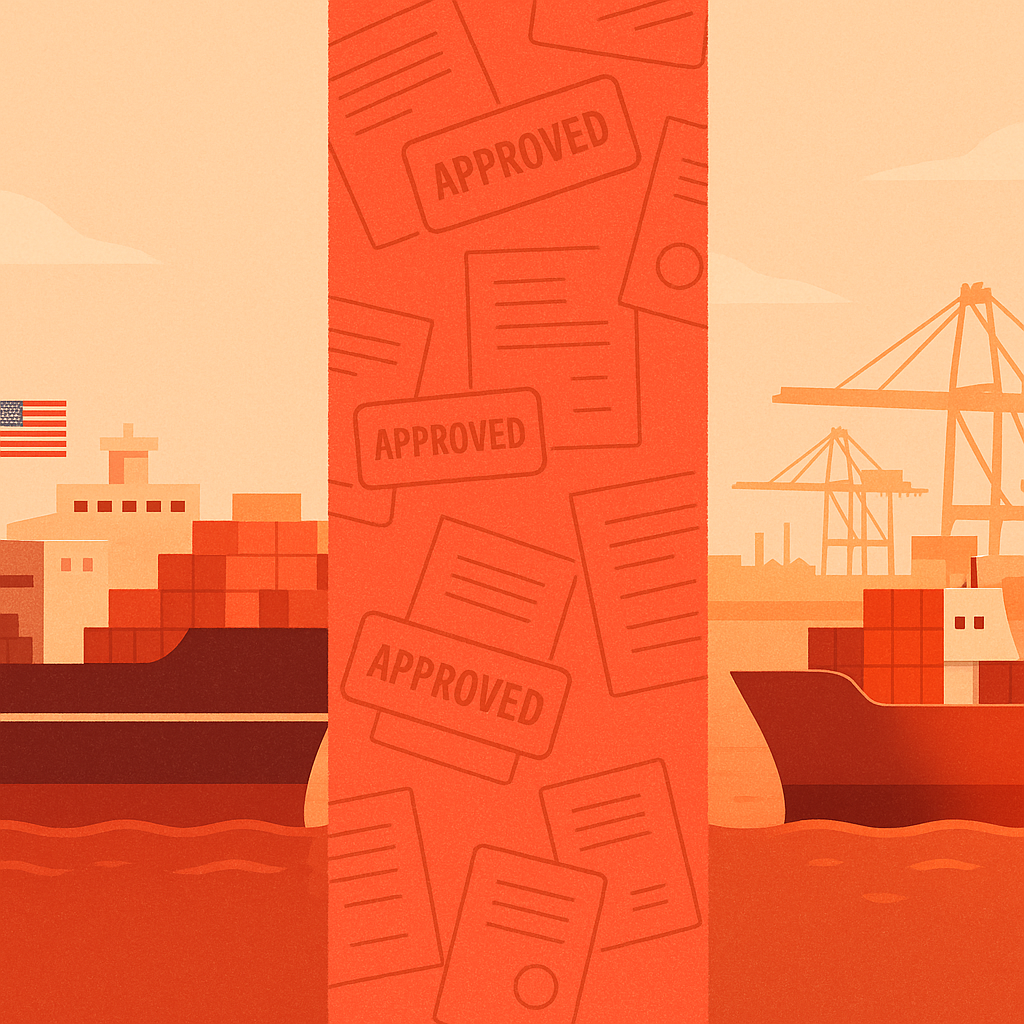
The new Jones Act waiver rules starting August 2026 are much stricter than before. Instead of a blanket exemption, each shipment of fuel and important goods now needs special approval for every trip. Operators must get the green light from both the Department of Defense and MARAD before moving cargo. This change means more federal checks and slower processes, making it harder for shippers to use foreign ships. People in the U.S. shipping industry like these new rules, but others worry it might slow down supply chains and won't lower gas prices much.
What are the new restrictions on the Jones Act waiver in August 2026?
The August 2026 Jones Act waiver extension requires voyage-by-voyage approval for shipments of diesel, gasoline, crude oil, and other key commodities. Operators must now obtain Department of Defense and MARAD approval for each trip, replacing the previous blanket exemption and increasing federal oversight.
The Trump administration has extended relief from the Jones Act for another 90 days, but the move comes with significant new restrictions that mark a departure from earlier, more permissive policies. According to Argus Media reporting, the waiver - which covers shipments of diesel, crude oil, gasoline, petrochemicals, natural gas, and fertilizer - now requires voyage-by-voyage approval rather than operating as a blanket exemption.
From Blanket Relief to Case-by-Case Review
The shift represents a fundamental change in how Jones Act waivers are administered. Under the previous framework, vessel operators or charterers could document their reasons for using the waiver with relatively minimal oversight. The new process, however, mandates that the Department of Defense consult with the Maritime Administration (MARAD) before any individual voyage qualifies for exemption.
Reuters confirmed on August 10, 2026, that the administration moved away from broad exemptions to individual voyage review, effectively adding a layer of bureaucratic scrutiny to each shipment. The White House clarified that while the DoD retains final authority on granting waivers after consulting MARAD, this represents a meaningful structural change in oversight.
The Data Behind the Policy Shift
According to industry reports, MARAD data revealed patterns that likely influenced the administration's decision to tighten controls. Of the documented waiver voyages, a significant portion simply cited that the shipment was covered by the existing waiver. Many entries did not specifically state that Jones Act-compliant vessels were unavailable for the cargo in question.
This discrepancy between broad waiver usage and documented vessel unavailability appears to have raised concerns among policymakers and domestic shipping interests about whether the relief mechanism was being used appropriately.
| Policy Element | Earlier Waiver | August 2026 Change |
|---|---|---|
| Approval Method | Blanket exemption | Voyage-by-voyage review |
| Documentation | Operator self-certification | DoD-MARAD consultation required |
| Scope | Broad coverage | Narrowed to specific commodities |
| Oversight Level | Minimal federal review | Enhanced inter-agency scrutiny |
National Security Grounds and Historical Context
According to industry reports, the waiver was initially issued citing national security grounds - a justification with deep historical roots. The Jones Act, formally known as the Merchant Marine Act, was enacted to maintain a robust U.S. merchant fleet capable of serving both wartime and peacetime needs.
The legal authority for waivers stems from legislation that permits the executive branch to suspend coastwise shipping restrictions when doing so serves "the interest of national defense." This standard has been invoked periodically, most commonly after natural disasters.
Industry Pushback and Economic Concerns
Domestic shipping interests have been vocal in their support for the more restrictive approach, arguing that overly permissive waivers could undermine the U.S. maritime sector. These stakeholders contend that thorough reviews are necessary to prevent foreign-flagged vessels from displacing Jones Act-compliant carriers in trades where domestic capacity exists.
Industry analysts noted that the earlier waiver enabled substantial foreign-flagged vessel activity on Gulf Coast-West Coast and Gulf Coast-East Coast routes. While this flexibility helped address regional fuel supply imbalances, it also raised questions about the long-term viability of domestic tanker operations if waivers became routine.
Analysts cited by Reuters suggested that even the broader waiver was likely to reduce gasoline prices by only "pennies per gallon," indicating that shipping restrictions are just one factor among many - including refining capacity, crude oil prices, and regional demand - that determine fuel costs.
Operational Impact on Energy and Fertilizer Markets
The waiver covers critical commodities that flow between U.S. ports: diesel, gasoline, crude oil, jet fuel, propane, petrochemicals, natural gas, and fertilizer. These products are essential to regional supply chains, particularly when refineries face maintenance shutdowns or when geopolitical events disrupt normal trading patterns.
Under the new system, each voyage carrying these commodities on a foreign-flagged vessel must receive individual approval after DoD and MARAD verify that no suitable Jones Act vessel is available.
This requirement is expected to slow the approval process and create additional planning challenges for shippers who previously operated under the assumption that covered cargoes could move freely on foreign-flagged tonnage. Energy traders and fertilizer distributors will need to build longer lead times into their logistics planning to account for the consultation and approval cycle.
Looking Ahead: Future Developments
The extension gives the administration time to assess whether the new oversight mechanisms are working as intended. If MARAD data shows that voyage-by-voyage reviews are effectively directing foreign-flagged vessels only to trades where domestic capacity is truly unavailable, the administration may view the policy as a success.
Conversely, if the added bureaucracy creates supply chain bottlenecks without meaningfully protecting domestic shipping jobs, pressure may build for either a return to broader exemptions or a complete phase-out of the waiver. The coming months will serve as a test case for whether the U.S. can balance maritime industry protection with the practical need for shipping flexibility during periods of elevated demand or geopolitical uncertainty.