
Federal Government Launches Sweeping Enforcement Initiative Targeting Trucking Sector Fraud and Safety Violations
Feds launch major crackdown on trucking fraud & safety violations: targeting CDLs, training schools, & registration. States face funding cuts.
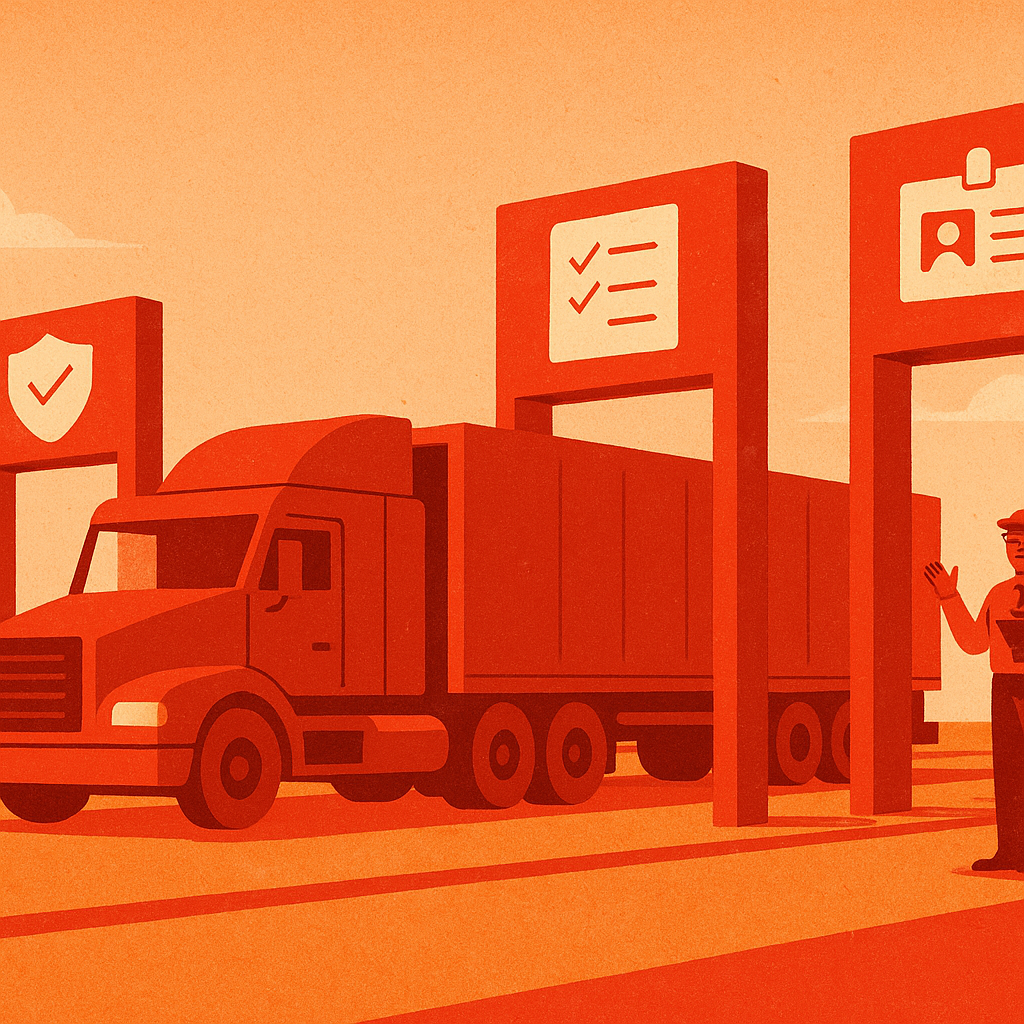
The federal government has started a big crackdown to stop fraud and safety problems in the trucking business. They are making it harder to get a truck driver's license, taking away thousands of fake licenses, and shutting down bad training schools. Truck drivers now have to prove they can speak English, or they can lose their jobs. The government is giving more money to help states and making new rules to stop companies from cheating the system. These tough new steps are supposed to make the roads safer and keep trucking companies honest.
What is the federal government's new enforcement initiative targeting trucking sector fraud and safety violations?
The federal government has launched a comprehensive enforcement initiative to combat fraud and safety violations in the trucking sector. Key actions include tightening CDL eligibility, revoking illegally issued licenses, removing unqualified training providers, enforcing English language proficiency, and modernizing registration systems to prevent carrier fraud.
The federal government has launched a sweeping enforcement initiative targeting fraud and safety violations across the trucking sector, with actions spanning driver licensing, training school oversight, and registration integrity. These measures represent one of the most comprehensive federal interventions in commercial motor vehicle operations in recent years, combining regulatory reform with substantial enforcement resources.
Crackdown on Non-Domiciled CDL Issuance
The Federal Motor Carrier Safety Administration (FMCSA) has implemented new rules to tighten eligibility requirements for non-domiciled commercial driver's licenses. The rule limits eligibility to specific visa categories, eliminates Employment Authorization Documents as stand-alone proof of eligibility, and mandates that states use the Systematic Alien Verification for Entitlements (SAVE) system before issuing licenses.
Federal audits have identified a significant number of states with compliance issues in their CDL issuance practices. Enforcement actions followed swiftly, with several states facing withheld federal funding for non-compliance. According to industry reports, a substantial number of illegally issued licenses have been revoked nationwide, according to the U.S. Department of Transportation.
Training Provider Registry Overhaul
FMCSA mobilized investigators across all 50 states to audit Entry-Level Driver Training (ELDT) providers. The results were dramatic: according to industry reports, thousands of unqualified training providers were removed from the FMCSA Training Provider Registry over the past year, with many more placed under heightened review.
| Enforcement Action | Number Affected | Timeline |
|---|---|---|
| Training providers removed from registry | Thousands | Past 12 months |
| States identified with CDL compliance issues | Significant number | Recent audits |
| Illegally issued licenses revoked | Substantial number | Ongoing |
| Federal investigators deployed | Many | Recent deployment |
The crackdown targeted schools that falsified training records, failed to meet curriculum standards, or refused to provide documentation during audits. While the enforcement aims to eliminate "CDL mills" that compromise driver quality, it has also reduced training capacity in some regions, potentially affecting the pipeline of new commercial drivers entering the workforce.
English Language Proficiency Enforcement
The Department of Transportation has issued new guidance to enforce existing English language proficiency standards for commercial drivers. The policy reversal came after years of relaxed enforcement and now requires English-only testing for CDL applicants.
Since implementation began, according to industry reports, a significant number of truckers have been removed from service for failing to meet basic language requirements. The sources indicate compliance warnings and potential withholding of federal safety funds for states that fail to enforce proficiency rules, demonstrating the financial consequences states face for inadequate enforcement.
The federal government is using both regulatory authority and fiscal pressure to ensure states comply with commercial driver safety standards, withholding substantial amounts in highway funding from non-compliant jurisdictions.
Federal Investment in Safety Infrastructure
Alongside enforcement actions, the administration announced $217 million in FMCSA grants for trucking and bus safety initiatives. The funding package supports multiple objectives:
- Commercial Driver's License Program Implementation Grants help states modernize CDL systems, strengthen compliance monitoring, and enhance licensing process integrity
- High Priority Commercial Motor Vehicle Safety Grants fund roadside inspection technology and enforcement training
- Commercial Motor Vehicle Operator Safety Training Grants support workforce development programs, including initiatives for military service members transitioning to civilian trucking careers
This dual approach of enforcement and capacity-building distinguishes the current initiative from purely punitive measures. States receiving grants must demonstrate progress in CDL modernization and fraud prevention while maintaining federal compliance standards.
Registration System Modernization
FMCSA is implementing significant changes to its carrier registration process to combat "chameleon carrier" fraud, where unsafe operators shut down and re-register under new identities to evade enforcement. In April 2026, FMCSA announced updates to DataQs to improve turnaround times and require states to use a multi-stage independent review process with deadlines for safety-record correction requests while simultaneously tightening identity verification requirements for new registrants.
The registration reforms require carriers to use login.gov-based authentication, creating a more secure framework for managing operating authority. FMCSA has reported reviewing thousands of authority applications and denying registration to hundreds of companies exhibiting reincarnation patterns or other fraud indicators.
Industry Response and Adaptation
Major trucking industry groups have largely supported the federal enforcement push, with the American Trucking Associations backing legislation to strengthen registration security and improve fraud detection. Industry stakeholders have emphasized that fraudulent operators undermine legitimate carriers and compromise highway safety, making enforcement a competitive necessity rather than regulatory burden.
The trucking sector's response reflects recognition that fraud and non-compliance create unfair competition, with legitimate carriers supporting measures that level the playing field while expressing concern about implementation efficiency.
However, carriers also face operational challenges adapting to the new requirements. Stricter verification procedures, enhanced documentation standards, and more rigorous driver qualification processes require updated compliance systems and additional administrative resources. Some industry observers have noted potential capacity constraints as lower-quality training providers exit the market and licensing verification becomes more stringent.
Enforcement Outlook
The scope and pace of federal action suggest continued focus on enforcement implementation rather than new rulemaking. FMCSA has signaled ongoing attention to driver qualification integrity, training provider compliance, and registration fraud prevention. States face ongoing pressure to align their licensing practices with federal standards or risk substantial funding penalties.
For carriers, the changing landscape requires proactive compliance management. Motor carriers must verify CDL medical certifications through updated systems, representing a shift in verification processes. ELDT requirements remain fully in force for first-time Class A and B CDL applicants, upgrades, and certain endorsements, with training completion reporting strictly monitored.
The federal initiative represents a fundamental shift in how commercial driver licensing and training are overseen, moving from a largely state-managed system with federal oversight to one with active federal enforcement backed by significant financial consequences for non-compliance. Whether this approach successfully improves safety outcomes while maintaining adequate driver supply will become clearer as the enforcement actions continue.