
Navigating the New FMCSA Non-Domiciled CDL Rule: A Carrier's Guide to Compliance and Workforce Planning
New FMCSA rule limits non-domiciled CDLs to H-2A, H-2B, E-2 visas. Carriers face compliance challenges & need workforce planning.
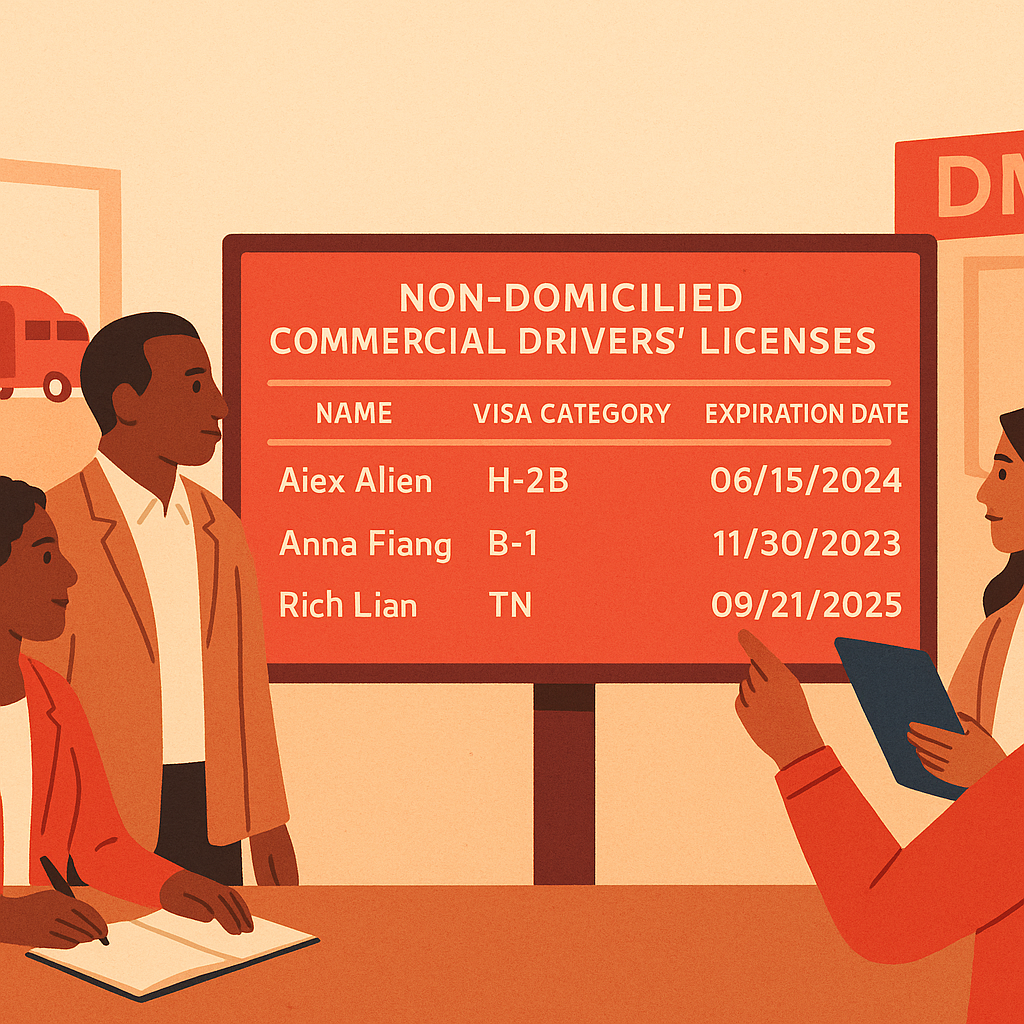
The new FMCSA rule, starting March 16, 2026, makes it much harder for foreign truck drivers to get or renew their commercial licenses in the U.S. Now, only drivers with H-2A, H-2B, or E-2 visas can get these licenses, and they must pass strict checks and go in person for paperwork. States and trucking companies will have more work to track documents and make sure drivers stay legal. Many drivers with other types of visas or permits will not be able to renew their licenses and could lose their jobs. Because of these changes, companies will need better planning to avoid losing drivers and keep their trucks on the road.
What are the key changes in the FMCSA's new non-domiciled CDL rule for carriers?
The FMCSA's final rule, effective March 16, 2026, limits non-domiciled CDLs to drivers with H-2A, H-2B, or E-2 visas. States may use verification systems to confirm immigration status. In-person processing and tighter document tracking create significant compliance and workforce planning challenges for carriers.
The Federal Motor Carrier Safety Administration issued a final rule in early 2026 that fundamentally reshapes how non-citizen drivers can obtain and maintain commercial driver's licenses. The rule, which took effect March 16, 2026, sharply narrows eligibility for non-domiciled CDLs and commercial learner's permits to only three specific nonimmigrant visa categories: H-2A, H-2B, and E-2.
The Core Changes to CDL Eligibility
Under the new framework, state Driver's Licensing Agencies may use verification systems like SAVE to confirm immigration status when processing non-domiciled commercial credentials. USCIS describes SAVE as a verification system used by agencies to confirm immigration status or related eligibility information. The rule eliminates the previous practice in some states of accepting an Employment Authorization Document alone as sufficient proof of eligibility.
According to industry reports, applicants must now present documentation showing their qualifying immigration status. Industry sources suggest that credential expiration dates may be tied to authorized stay periods, which can force more frequent renewals and increased follow-up with state licensing agencies.
The FMCSA described the rule as a move to stop "unqualified foreign drivers" from obtaining commercial licenses, while legal analysts note it creates significant operational burdens for carriers managing non-domiciled driver pools.
Many categories of non-citizens who remain lawfully present and work-authorized in the United States are no longer eligible for non-domiciled CDL renewal. This includes individuals with DACA status, Temporary Protected Status, asylum-related work permits, humanitarian parole, refugee status, and other Employment Authorization Document-based cases. These drivers may continue operating until their current credentials expire, but they cannot renew under the new framework.
Document Verification and In-Person Requirements
The rule imposes additional procedural requirements that increase compliance burdens for both state agencies and motor carriers. All issuance, renewal, transfer, and upgrade transactions for non-domiciled credentials must now be conducted in person. SAVE can be used to verify immigration-related information using identifiers such as an I-94 number, and states may implement enhanced document retention and verification procedures.
For state DMVs, these requirements mean increased staffing demands and scheduling complexity. For carriers, the in-person mandate can create delays in onboarding and renewal processing even when drivers are otherwise eligible. States that cannot comply with the final rule by the March 16 effective date must immediately pause the issuance of non-domiciled CLPs and CDLs, which directly affects carrier recruiting and retention in those jurisdictions.
Operational Impact on Carriers
Trucking companies that rely on non-domiciled drivers face a cascade of compliance challenges. Because credentials may be tied more closely to immigration-document expiration dates, fleets need more active expiration tracking, closer HR coordination, and backup staffing plans than before. Legal analysis suggests carriers may see a smaller pool of eligible drivers, increased compliance obligations, and the need for proactive workforce planning.
The rule's effect extends beyond new applications to renewals of existing non-domiciled drivers who do not fit the narrowed visa categories. Over time, this can shrink the available foreign-born CDL driver pool as current credentials expire and become ineligible for renewal. Industry commentary indicates the rule had a near-immediate impact on transportation capacity when it was finalized, as some improperly issued licenses were removed from circulation.
Compliance Strategies for Motor Carriers
Compliance teams should build a live roster of every non-domiciled driver, tracking license type, issuing state, expiration date, visa category, passport expiration, and Form I-94 "admit until" date. This roster serves as the core control point because credential eligibility is now directly tied to immigration status and document validity.
It is critical to separate CDL licensing eligibility from Form I-9 employment authorization. The FMCSA rule affects CDL eligibility, not underlying federal work authorization. A driver may remain work-authorized yet become ineligible to renew a non-domiciled CDL or CLP. Maintaining distinct workflows for licensing review and employment eligibility verification helps avoid mixing the two processes.
Renewal planning should focus exclusively on the three eligible categories - H-2A, H-2B, and E-2 - with early identification of drivers whose credentials may not be renewable and transition plans built before expiration.
Motor vehicle records should be obtained for every state where the driver has held a license or permit over the prior three years, with the record obtained within 30 days of hire and reviewed annually. For non-citizen drivers, add a separate audit step that checks whether the license remains valid under the current immigration category and whether the credential must be renewed in person.
State Implementation Challenges
The rule creates uneven state-by-state disruption because not all Driver's Licensing Agencies were ready to comply by the March 16 effective date. The FMCSA FAQ states that states unable to comply must immediately pause issuance, which complicates fleet staffing across regions. Some carriers may experience immediate staffing disruption if a state pauses issuance or revocation activity, while others may see slower effects as existing licenses age out.
Carriers should verify license validity through official state licensing outcomes rather than relying on photocopies of passports, visas, or Employment Authorization Documents in driver files. The rule requires states to implement enhanced verification procedures for immigration status before credential transactions, so official licensing outcomes are the authoritative source.
Documentation and Audit Requirements
Driver qualification files should include the driver application, prior employer verification, motor vehicle records, road test documentation or waiver, medical examiner's certificate, current license information, and annual violation certifications. For non-domiciled drivers, add documentation of the immigration category review, credential expiration date tied to immigration documents, and the date of the most recent state verification.
Recurring audits should check whether credentials remain valid under current immigration categories and whether renewals are approaching. Because some renewals may require in-person processing and license durations may be shorter when tied to immigration-document validity, planning should start well before expiration. Carriers should document the decision trail with dated records of what was reviewed, what document category was used, when the state credential expires, and who performed the review.
Workforce Planning Considerations
The rule may trigger litigation or implementation volatility, so some details can shift if courts or agency guidance intervene. Carriers should prepare contingency plans for drivers who lose renewal eligibility, including reassignment, backup coverage, or succession planning. Training should be role-specific: recruiting teams need to know which immigration categories are currently eligible for licensing, safety and compliance staff should own the driver qualification file and renewal calendar, and dispatch should be notified early if a credential is at risk so loads and routes can be adjusted before a compliance gap occurs.
The compliance burden is partly a cascade effect. If state DMVs must pause or slow non-domiciled issuance until they can comply, carriers may see delays in onboarding and renewal processing even when drivers are otherwise eligible. Fleets that use non-domiciled drivers need more active expiration tracking, HR coordination, and backup staffing plans than before to manage these risks effectively.