
Veteran Truckers & Social Security: Navigating Late-Career Income for Optimal Benefits
Veterans finding how late-career trucking income impacts Social Security. Learn about earnings tests, owner-ops, and maximizing benefits.
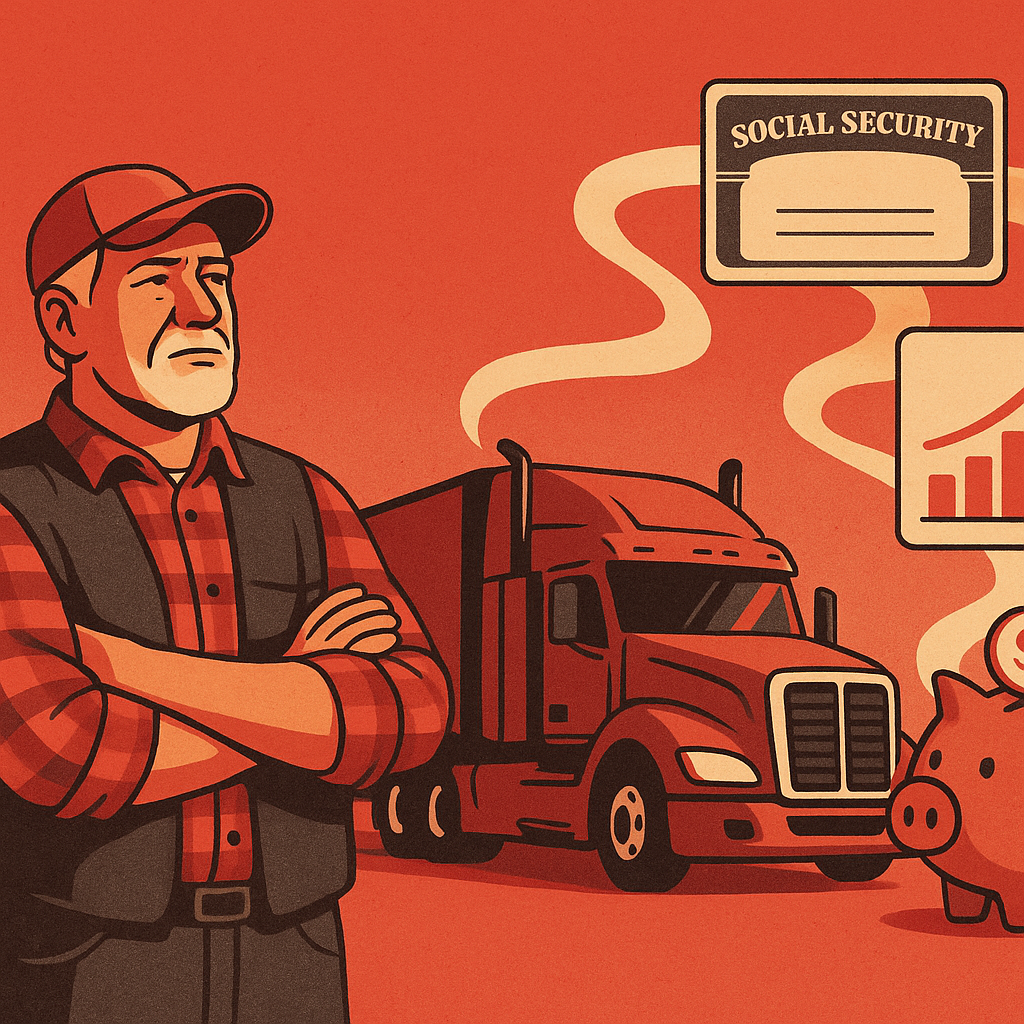
Veteran truckers who start driving later in life can use their new trucking income to boost their Social Security benefits by replacing low-earning years in their work history. If they claim benefits before full retirement age, making too much money may temporarily lower their Social Security checks, but once they reach full retirement age, they can earn any amount without penalties. Company drivers and owner-operators are treated differently for Social Security depending on how income is reported. Veterans' VA benefits and Social Security don't affect each other, so they can collect both. Planning is key: saving more, watching out for health, and timing Social Security claims can really help make retirement more secure.
How does late-career trucking income affect Social Security benefits for veterans?
Late-career trucking income can both increase and temporarily reduce Social Security benefits for veterans. If you claim benefits before full retirement age, extra earnings may trigger temporary withholding. However, higher recent earnings can replace lower years in your work history, potentially raising your monthly Social Security benefit long-term.
Veterans who start trucking careers after military service face a unique financial puzzle: how does late-career income affect Social Security benefits already claimed or about to be claimed? The answer depends on timing, earnings levels, and whether you drive as an employee or owner-operator.
Understanding the Social Security Earnings Test
For 2026, Social Security applies strict income limits to anyone collecting retirement benefits before reaching full retirement age. If you are under full retirement age for all of 2026, Social Security reduces benefits by $1 for every $2 earned above $24,480. The threshold rises dramatically if you reach full retirement age during 2026: benefits drop by $1 for every $3 earned above $65,160, but only until the month you hit full retirement age.
Once you reach full retirement age, the earnings test disappears entirely. You can earn any amount without Social Security withholding a penny.
Company Driver vs. Owner-Operator
The type of trucking work you do determines which income Social Security counts. Company drivers report W-2 wages, so your gross pay triggers the earnings test. Owner-operators and independent contractors, however, are judged on net self-employment income after business expenses. That means two drivers with identical gross revenue can face very different benefit outcomes depending on how they structure their work.
Social Security also counts bonuses, commissions, and vacation pay as earnings. It does not count investment income, pensions, or annuities.
How Trucking Income Can Improve Your Benefit Over Time
Working later in life does more than just trigger temporary withholding. Social Security calculates your retirement benefit using your highest 35 years of indexed earnings. If you have years with zero or low earnings in your work history, new trucking wages can replace those weak years and raise your average indexed monthly earnings. The result: a higher monthly benefit going forward.
This matters especially for veterans whose military service may have left gaps in their civilian earnings record. While military wages generally count toward Social Security if FICA taxes were paid, some service periods relied on deemed wage credits rather than actual payroll. Adding several years of solid trucking income can fill those holes.
If benefits are already claimed early, the same paycheck can both help and hurt: it may improve lifetime earnings history over time, but it can also trigger withholding in the years before full retirement age.
Self-Employment Tax for Owner-Operators
Many veterans enter trucking as owner-operators, attracted by the independence and potential earnings. But self-employment brings a tax surprise: you pay both the employer and employee portions of Social Security and Medicare taxes. For 2026, self-employment tax is 15.3% applied to 92.35% of net earnings, which is equivalent to about 14.13% of net profit before the Social Security wage base limit; employees generally have 7.65% withheld from pay for their share of FICA, with the employer paying the other 7.65% separately.
The upside? Every dollar you pay into the system through self-employment tax builds your Social Security earnings record, just like W-2 wages. The downside? Net earnings can differ sharply from gross pay once you account for fuel, maintenance, insurance, and depreciation. Two drivers with the same gross income may have very different Social Security payroll tax exposure and retirement outcomes.
Veterans Benefits and Social Security Work Separately
VA disability compensation and military retirement pay do not reduce Social Security retirement benefits, and Social Security does not reduce VA compensation. The self-employment tax rate is 15.3% in 2026, and the Social Security wage base is $184,500 for 2026; these programs operate independently. The real interaction happens between your trucking earnings and Social Security's earnings test, not between VA benefits and Social Security.
For late-career workers, this separation is good news. You can collect VA disability, work in trucking, and claim Social Security without one program canceling another. The challenge is managing the earnings test if you claim Social Security before full retirement age.
Timing Your Claim
Delaying Social Security while working in trucking can be financially powerful. For every year you postpone benefits past full retirement age, Social Security adds delayed retirement credits that increase your monthly payment by about 8% per year, up to age 70. If you start trucking in your early 60s and can live on VA benefits or savings, waiting to claim Social Security until 70 can produce a significantly larger lifetime benefit.
The trade-off: you need enough income or assets to bridge the gap. Trucking can serve as that bridge, especially if you enter the field after military retirement or a civilian job change.
Building a Late-Career Financial Plan
Financial advisors who work with older truckers emphasize three priorities: reduce fixed costs, build an emergency fund, and use retirement accounts strategically. Trucking income can fluctuate with fuel prices, freight demand, and equipment breakdowns, so planning should assume variability rather than steady paychecks.
Starting early gives your money more time to grow, but it is never too late to begin saving for retirement.
Employees can defer significant amounts to a 401(k), with additional catch-up contributions available for those age 50 or older. Owner-operators can use Solo 401(k), SEP, or SIMPLE IRA structures to shelter income. The shorter your time horizon, the more aggressive your savings rate needs to be. Many advisors recommend starting with a meaningful portion of income and increasing contributions if you began saving late.
Emergency funds matter even more for older drivers. Most financial planners recommend holding six to twelve months of living expenses in liquid savings, because a major repair, medical issue, or weak freight market can interrupt income without warning. Late-career workers have less time to recover from setbacks than younger drivers.
Medicare and Work
Medicare eligibility begins at 65, regardless of work status. You can keep driving and still qualify for Medicare, and most beneficiaries do not lose Medicare because of earned income. The bigger issue is how income affects premiums through income-related monthly adjustment amounts (IRMAA). High earners pay more for Medicare Part B and Part D, based on modified adjusted gross income from two years prior.
For veterans, this means trucking income earned in 2024 can affect 2026 Medicare premiums. Planning around IRMAA thresholds can save hundreds of dollars per year.
Physical Demands and Retirement Planning
Trucking remains physically demanding. Long hours, irregular sleep, and the strain of loading and unloading cargo take a toll, especially for older drivers. Federal medical qualification standards require drivers to pass regular exams, and age-related health conditions can end a trucking career abruptly.
This reality makes retirement planning especially urgent for late-career entrants. Unlike workers who start trucking in their 20s or 30s, veterans who begin driving in their 50s or 60s have a shorter window to build savings and maximize Social Security benefits. Every year of delay in claiming Social Security, every percentage point added to retirement contributions, and every dollar saved in an emergency fund matters more when the career runway is short.
Making the Numbers Work
The best financial outcome for a veteran starting trucking later in life depends on coordinating several moving parts: when to claim Social Security, how to structure trucking work (employee vs. self-employed), how to manage savings, and how to manage the earnings test if benefits are already claimed.
Working with a financial advisor who understands both trucking economics and Social Security rules can help. The goal is not to maximize any single variable, but to turn a late-career income stream into dependable retirement support without taking on unnecessary risk. For many veterans, trucking offers that opportunity - as long as the financial planning keeps pace with the miles.